São Miguel
Azores, Portugal
São Miguel is the largest island of the Azores, a green volcanic island in the mid-Atlantic about two hours'…
269 tours & trips
Portugal · Atlantic Ocean · Volcanic island
Pico is the second-largest island of the Azores, a black volcanic cone rising 2,351 metres out of the Atlantic, the highest mountain in Portugal. Visitors come to climb it, to watch sperm whales from the old whaling villages and to walk through the stone-walled vineyards listed by UNESCO.
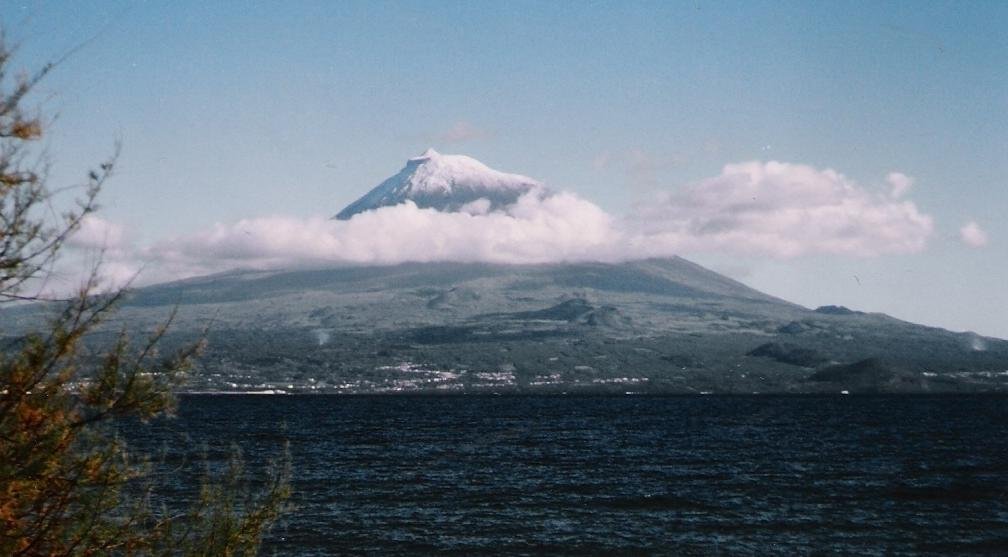
Photo: José Dias at Portuguese Wikipedia, CC BY-SA 3.0
| Getting there | 30-min ferry from Horta on Faial; flights to Pico airport from Ponta Delgada, Terceira and Lisbon |
|---|---|
| Gateway | Horta (Faial) or Ponta Delgada |
| Travel time | 30 min by ferry from Horta or about 45 min by air |
| Days | 3 to 5 nights |
| Best months | Jun–Sep for the summit and whales; Apr–May for blue whales; wet, windy Nov–Mar |
| Getting around | Rent a car; buses are infrequent and slow, and none go to the mountain house |
| Booking | Summit guide a few days ahead in summer; cars and rooms early for July–August |
| Cost | Mid-range for Portugal |
| Beaches | No sandy beaches; swim in lava-rock sea pools at Madalena, Lajes and Sao Roque |
| Sea | Atlantic Ocean |
| Archipelago | Azores |
| Area | 447 km² |
| Population | 13,834 |
| Highest point | 2,351 m (Mount Pico) |
| Ferry | 30 min from Horta (Faial) or Ponta Delgada |
| Airport | Yes, scheduled flights |
| Car-free | No |
| UNESCO | Landscape of the Pico Island Vineyard Culture |
| Checked | October 2026 |
Three things are sold on Pico, and most visitors do at least two of them.
The first is the mountain. Guided climbs start at the mountain house at about 1,200 metres, where every climber must register, and take seven to eight hours up and down over loose lava and steep scrambles. A guide is not compulsory for fit, experienced hikers, but the summit is often in cloud and the path is easy to lose, so one is worth paying for on a first climb. Overnight versions sleep in the crater for the sunrise.
The second is the sea. Whale-watching boats leave from Lajes do Pico and Madalena, usually rigid inflatables with a briefing first; a lookout on the cliffs radios the skippers where the whales are, as in the whaling days. Sperm whales are seen most of the year and dolphins almost always. Kayak and snorkelling trips and introductory dives are smaller offers.
The third is the land: full-day or half-day tours by minibus or buggy that take in the vineyards of Criacao Velha, the lava tube, the lakes of the central plateau and a wine tasting, often with lunch. Pickup from the ferry or your hotel is usually included.
Book the whale trip and the climb first, and keep a spare day for the weather.
The climb starts at the mountain house at about 1,200 metres on the road from Madalena, where you register and collect a tracking device. A path marked with numbered posts climbs about 1,100 metres to the crater rim; the final cone, Piquinho, is a short scramble with steam rising from cracks in the rock. Start early and carry warm layers and plenty of water.
The southern village was the centre of Azorean whaling until it ended in the 1980s. The whalers' museum in the old boathouses shows the open canoes, harpoons and scrimshaw. Whale-watching boats leave from the harbour below, and the old lookout towers on the headlands are still used to spot the blows. Afterwards swim in the rock pools by the fort.
Just south of Madalena, thousands of small plots called currais are enclosed by walls of black basalt that shelter the vines from the salt wind. This is the heart of the UNESCO-listed landscape. Walk the marked path between the walls to the red windmill and the tide pools, then taste Verdelho at the cooperative or a small producer in Madalena.
The longest lava tube in Portugal runs for about 5 km under the fields near Criacao Velha. Guided visits of about an hour, with helmet and torch, follow a few hundred metres of the tunnel past lava stalactites and ropy floors. Groups are small, so book a slot in summer; it is a good plan for a day when the mountain is in cloud.
A road across the high middle of the island passes Lagoa do Capitao and other crater lakes among cedars and grazing cows, with the mountain behind when the cloud lifts. Drop down to Sao Roque on the north coast for the museum in the old whale factory and the sea pools, and to the vineyards of Lajido, another protected corner.
Our pick for each kind of trip, with live dates and prices. Free cancellation on most.
Best for: First visit, the whole island in a day
A full day by minibus through the vineyards, the plateau lakes and the coastal villages, with tastings, so you see the island without driving yourself.
Most people arrive via Faial. Passenger ferries cross from Horta to Madalena in about 30 minutes several times a day all year, more often in summer, with tickets sold at the port or online; it is easy to stay in Horta and see Pico as a day trip, or the other way round. In summer ferries also link Pico with Sao Jorge and the other islands of the central group.
Pico has its own small airport on the north coast between Madalena and Sao Roque, with inter-island flights from Ponta Delgada and Terceira and some direct flights from Lisbon, though many visitors fly to Horta or Ponta Delgada instead. Rent a car on each island rather than taking one across. Atlantic swell can cancel crossings in winter, so leave slack before an onward flight.
A car is close to essential. The island is more than 40 km long, and a ring road links Madalena, Lajes and Sao Roque, with slower roads over the plateau and up to the mountain house, which has no bus. Public buses run a few times a day on weekdays and suit locals more than visitors. Taxis can be booked for the drive to the start of the climb. Rent in Madalena or at the airport, and book ahead for summer, when cars run out.
Summer is the season. From June to September the weather is mildest, the sea reaches about 22 to 23 degrees in August and the summit is most often clear, though it can cloud over within an hour. July and August are busiest, but Pico never feels crowded. Whale watching runs roughly from April to October; spring brings migrating baleen whales, including blue whales, while sperm whales stay all year.
From November to March rain and Atlantic storms are frequent, boats are often cancelled, and the climb needs winter experience and is often impossible because of ice and wind. Many guides and some restaurants close. Late August brings the Whalers' Week festival in Lajes, and the grape harvest follows at the end of summer. Three nights is the minimum, to allow at least one good weather day for the climb.
Madalena is the practical base: the ferry port, the airport nearby, restaurants, car rental and the start of the mountain road. Lajes do Pico on the south coast is smaller, often sunnier and the place to stay for whale watching. Sao Roque and the villages of the north coast are quieter and greener, with sea pools and views across to Sao Jorge. Rural houses in converted stone wine cellars, scattered through the vineyards, are the most characterful choice.
Pico is the youngest island of the Azores, about 300,000 years old, and its volcano erupted in historical times, sending lava flows down to the sea in the early 18th century. Settlers arrived only in the 1480s and found little soil, so they cleared the lava by hand and built the vineyard walls, whose wine was shipped through Horta as far as Russia. In the 19th century American whaling ships taught the islanders to hunt sperm whales from open boats, which they did until 1987. Today the old lookouts guide whale watchers instead.
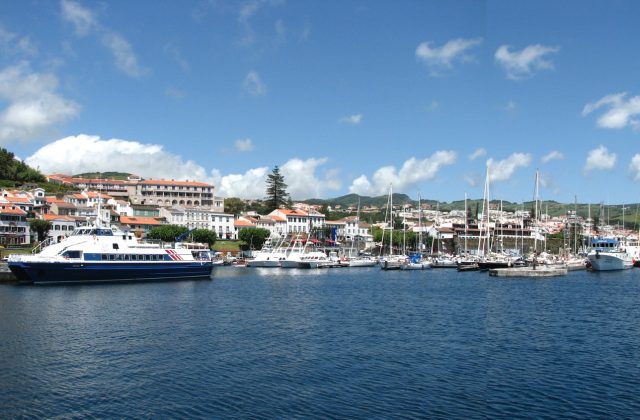
Faial is the natural pair: Horta, 30 minutes away by ferry, has the famous yacht marina and the Capelinhos volcano, and the two islands make a trip of five to seven nights. Sao Jorge, with its cliffs and coastal fajas, is a short ferry ride away in summer. Terceira and Sao Miguel are short flights, so Pico fits easily into a two-week Azores route.
30-min ferry from Horta on Faial; flights to Pico airport from Ponta Delgada, Terceira and Lisbon.
From Horta (Faial) or Ponta Delgada: 30 min by ferry from Horta or about 45 min by air.
3 to 5 nights.
Jun–Sep for the summit and whales; Apr–May for blue whales; wet, windy Nov–Mar.
Rent a car; buses are infrequent and slow, and none go to the mountain house.
Go if you want to climb Portugal's highest peak, see whales and drink volcanic wine in quiet villages. Skip it or choose Sao Miguel if you need sandy beaches, hot springs, nightlife or reliable sunshine. With about 30 min each way from Horta (Faial) or Ponta Delgada, a day trip is easy to do.
Mid-range for Portugal.
No sandy beaches; swim in lava-rock sea pools at Madalena, Lajes and Sao Roque.
Summit guide a few days ahead in summer; cars and rooms early for July–August.
Yes. Boat trips, guided tours and day trips for Pico can be booked online; live prices and free cancellation on most are shown on this page.
Azores, Portugal
São Miguel is the largest island of the Azores, a green volcanic island in the mid-Atlantic about two hours'…
269 tours & trips
Azores, Portugal
Santa Maria is the southernmost and oldest island of the Azores, a 97-square-kilometre island less than 100 km south of…
210 tours & trips
Azores, Portugal
Terceira is a green volcanic island of 400 square kilometres in the central Azores, about 1,200 km west of Lisbon,…
86 tours & trips
Azores, Portugal
Faial is a volcanic island of 173 square kilometres in the central Azores, facing the cone of Pico across a channel…
23 tours & trips
Azores, Portugal
Sao Jorge is a long, narrow island in the central Azores, 53 km long and only 8 km wide, a volcanic ridge with high…
15 tours & trips
Azores, Portugal
Corvo is the smallest and most northerly island of the Azores, an extinct volcano of 17 square kilometres with a single…
4 tours & trips