Santa Maria
Azores, Portugal
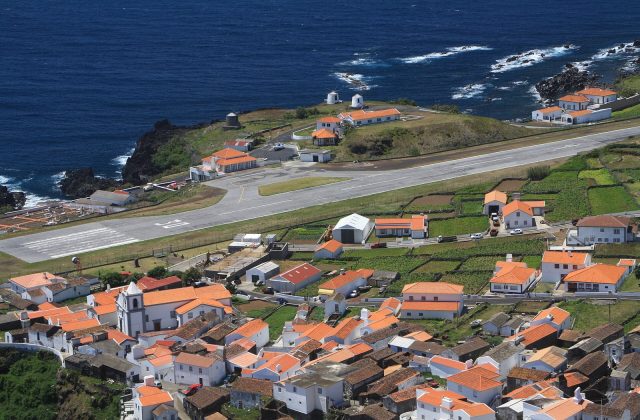
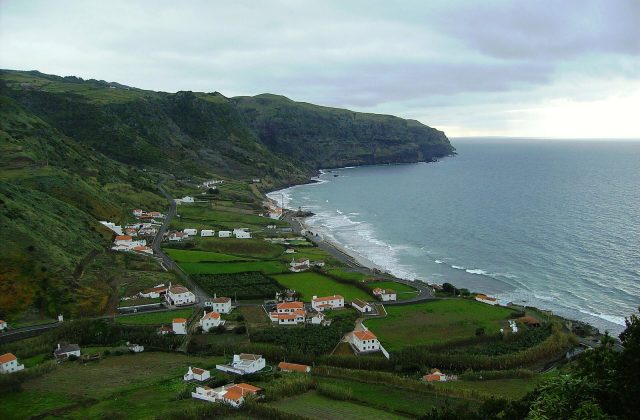
Santa Maria is the southernmost and oldest island of the Azores, a 97-square-kilometre island less than 100 km south of…
210 tours & trips
Portugal · Atlantic Ocean · Nature & wildlife island
São Miguel is the largest island of the Azores, a green volcanic island in the mid-Atlantic about two hours' flight from Lisbon. Crater lakes, hot springs, tea gardens and whale watching make it the easiest introduction to the archipelago, and its capital, Ponta Delgada, is the largest city in the islands.
| Getting there | Flights from Lisbon in about 2 h and from Porto; seasonal direct flights from Europe and North America |
|---|---|
| Gateway | Ponta Delgada airport |
| Travel time | About 2 h by air from Lisbon |
| Days | 3 to 5 nights |
| Best months | May–Sep; Jul–Aug warmest and busiest; mild but wet and windy Nov–Mar |
| Getting around | Rent a car; buses link Ponta Delgada with the main towns but rarely the lakes |
| Booking | Car hire and summer flights well ahead; whale trips and Furnas pools a day or two ahead |
| Cost | Mid-range, good value for Western Europe |
| Beaches | Dark volcanic sand: Santa Bárbara for surf, Mosteiros and Água d'Alto to swim; Ferraria rock pool |
| Sea | Atlantic Ocean |
| Archipelago | Azores |
| Area | 745 km² |
| Population | 138,557 (2025) |
| Highest point | 1,103 m (Pico da Vara) |
| Airport | Yes, scheduled flights |
| Car-free | No |
| Checked | October 2026 |
Most tours on São Miguel are built around three areas, and they map neatly onto the days of a short stay.
The west is the classic full or half day: the twin lakes of Sete Cidades seen from the crater rim, often with Lagoa do Fogo and sometimes the hot sea pool at Ferraria. The east is Furnas, where you see the boiling springs, eat the stew cooked in the ground and bathe in thermal pools, usually combined with a tea plantation on the north coast. Minibus and jeep versions exist for each, with or without lunch; check whether pool entry is included.
The second big group is the sea. Whale and dolphin watching runs from Ponta Delgada and Vila Franca do Campo on fast boats or larger catamarans, guided by spotters on the cliffs; dolphins are seen most days, whales depend on the season. Snorkelling and diving trips go to the islet off Vila Franca.
Active options include canyoning, guided hikes to Lagoa do Fogo and along the coast, jet ski and quad trips.
If you rent a car, drive the lakes and Furnas yourself and spend your budget on a whale trip and perhaps canyoning; without one, a west day and an east day cover the island well.
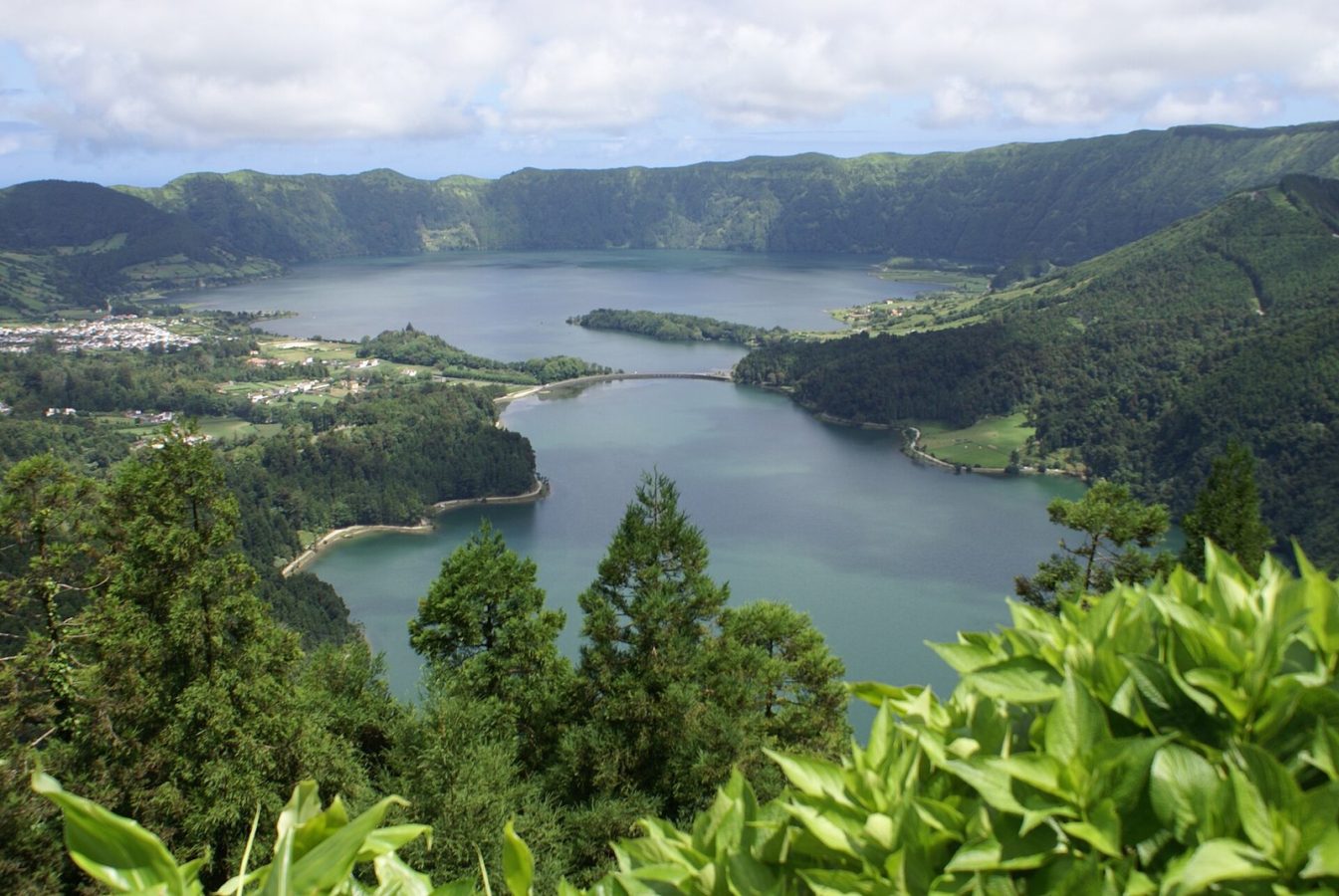
A huge crater at the western end holds two joined lakes, one greener and one bluer, with a village on the shore. The best view is from the Vista do Rei viewpoint on the rim, about 40 minutes' drive from Ponta Delgada; come early, as cloud often settles by midday. A rim path offers a longer walk.
In the east, the village of Furnas sits in a crater full of bubbling fumaroles. At the lake, pots of cozido, a meat and vegetable stew, are buried in the hot ground for hours. Swim in the warm, orange iron-rich pool of the Terra Nostra garden, or at the smaller Poça da Dona Beija pools in the evening.
In the centre of the island, a lake fills a deep crater surrounded by steep green walls and no buildings at all. Viewpoints sit on the road between Ribeira Grande and Lagoa; a steep path leads down to the shore. On the north side, the Caldeira Velha spring has warm pools under tree ferns.
The capital has black-and-white cobbled streets, the three arches of the city gate, baroque churches and a seafront promenade. It is the base for whale-watching boats and has the best choice of restaurants. On the edge of town, the pineapple greenhouses show how the fruit is grown under glass, a local tradition.
São Miguel grows tea, the only commercial plantations in Europe. At Gorreana and Porto Formoso, rows of bushes run down to the sea, and the small factories can be visited free, with a cup at the end. Combine them with the black beach of Santa Bárbara near Ribeira Grande, the island's surfing spot.
The north-east corner is the greenest and least visited part, with flower-lined roads, waterfalls and viewpoints over cliffs. Stop at the miradouros of Ponta do Sossego and Ponta da Madrugada, and at the Ribeira dos Caldeirões park with its mills and waterfall. Allow a full day, as the roads are slow.
Our pick for each kind of trip, with live dates and prices. Free cancellation on most.
Best for: First visit, the crater lakes
A full day to the twin lakes of Sete Cidades and the wild caldera of Lagoa do Fogo, with lunch, for those not driving on mountain roads in changeable weather.
Ponta Delgada airport, a few kilometres west of the city, has flights of about two hours from Lisbon several times a day and regular flights from Porto. There are direct flights in season from several European cities and from North America, especially Boston and Toronto, where many Azorean emigrants live, and some routes run all year. Inter-island flights connect São Miguel with the other eight islands of the Azores, which is how most people continue to Pico, Faial or Terceira.
There is no ferry from mainland Portugal. Seasonal inter-island ferries run in summer, but schedules are limited, so check before planning around them. Cruise ships call at Ponta Delgada, docking on the seafront within walking distance of the old town.
A rental car is close to essential: the island is about 65 km long, and the lakes, viewpoints and Furnas are spread out on winding mountain roads. A motorway links Ponta Delgada with Ribeira Grande and the south coast towns, which makes the trips quicker. Buses connect the capital with Furnas, Sete Cidades and Nordeste, but services are few. Taxis can be hired for a day, and tours suit non-drivers.
The Azores have a mild oceanic climate: rarely hot, rarely cold, and changeable at any time, with sun, mist and showers often in one day. Summer, from June to September, is the warmest and driest, with air around 25 degrees and the sea reaching about 22 degrees in August, and it is the busiest season for rooms and cars. May and October are good for walking and cheaper, with the hydrangeas in bloom from June.
From November to March it is green, windy and wet, with fewer boat trips, though the hot springs feel best then. Whale watching runs most of the year; spring brings migrating baleen whales such as blue and fin whales, while sperm whales and dolphins are seen year-round. Plan three to five nights for the main areas.
Ponta Delgada is the most practical base: restaurants, the whale-watching harbour and fast roads to both ends of the island. Furnas suits a night or two to enjoy the pools in the evening, when day visitors have gone. Ribeira Grande on the north coast has surf beaches and newer hotels, and rural houses around Sete Cidades and Nordeste offer quiet stays for walkers with a car.
São Miguel was uninhabited until Portuguese settlers arrived in the 1440s; eruptions and earthquakes have shaped its towns ever since. For centuries it lived from wheat and woad, then in the 19th century from oranges shipped to Britain, until disease ended the trade. Landowners replaced them with pineapples under glass and with tea, both still grown today, and created the gardens at Furnas. Poverty drove waves of emigration to Brazil, the United States and Canada, whose links remain strong. Low-cost flights from 2015 opened the island to tourism.
Pico, with the highest mountain in Portugal and its UNESCO vineyards, and Faial are about 40 minutes away by plane, and Terceira with its old town of Angra is a similar hop. Santa Maria, the sunniest island, is a short flight south. Lisbon makes an easy start or end to the trip.
Flights from Lisbon in about 2 h and from Porto; seasonal direct flights from Europe and North America.
From Ponta Delgada airport: about 2 h by air from Lisbon.
3 to 5 nights.
May–Sep; Jul–Aug warmest and busiest; mild but wet and windy Nov–Mar.
Rent a car; buses link Ponta Delgada with the main towns but rarely the lakes.
Go if you want crater lakes, warm volcanic springs, whale watching and walking in a mild green landscape. Skip it or choose Madeira or the Canaries if you need reliable sunshine and long beaches for a swimming holiday.
Mid-range, good value for Western Europe.
Dark volcanic sand: Santa Bárbara for surf, Mosteiros and Água d'Alto to swim; Ferraria rock pool.
Car hire and summer flights well ahead; whale trips and Furnas pools a day or two ahead.
Yes. Boat trips, guided tours and day trips for São Miguel can be booked online; live prices and free cancellation on most are shown on this page.
Azores, Portugal
Santa Maria is the southernmost and oldest island of the Azores, a 97-square-kilometre island less than 100 km south of…
210 tours & trips
Azores, Portugal
Pico is the second-largest island of the Azores, a black volcanic cone rising 2,351 metres out of the Atlantic, the…
181 tours & trips
Azores, Portugal
Terceira is a green volcanic island of 400 square kilometres in the central Azores, about 1,200 km west of Lisbon,…
86 tours & trips
Azores, Portugal
Faial is a volcanic island of 173 square kilometres in the central Azores, facing the cone of Pico across a channel…
23 tours & trips
Azores, Portugal
Sao Jorge is a long, narrow island in the central Azores, 53 km long and only 8 km wide, a volcanic ridge with high…
15 tours & trips
Azores, Portugal
Corvo is the smallest and most northerly island of the Azores, an extinct volcano of 17 square kilometres with a single…
4 tours & trips