São Miguel
Azores, Portugal
São Miguel is the largest island of the Azores, a green volcanic island in the mid-Atlantic about two hours'…
269 tours & trips
Portugal · Atlantic Ocean · Nature & wildlife island
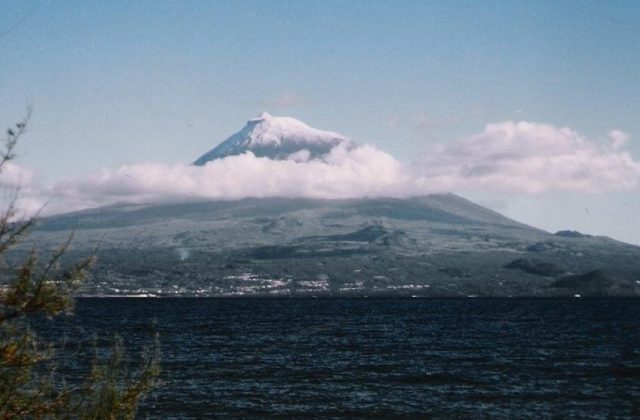
Faial is a volcanic island of 173 square kilometres in the central Azores, facing the cone of Pico across a channel only a few kilometres wide. Its harbour town of Horta is a famous stopover for yachts crossing the Atlantic, and the island adds a huge crater at its centre and the bare grey landscape of the 1957 Capelinhos eruption.
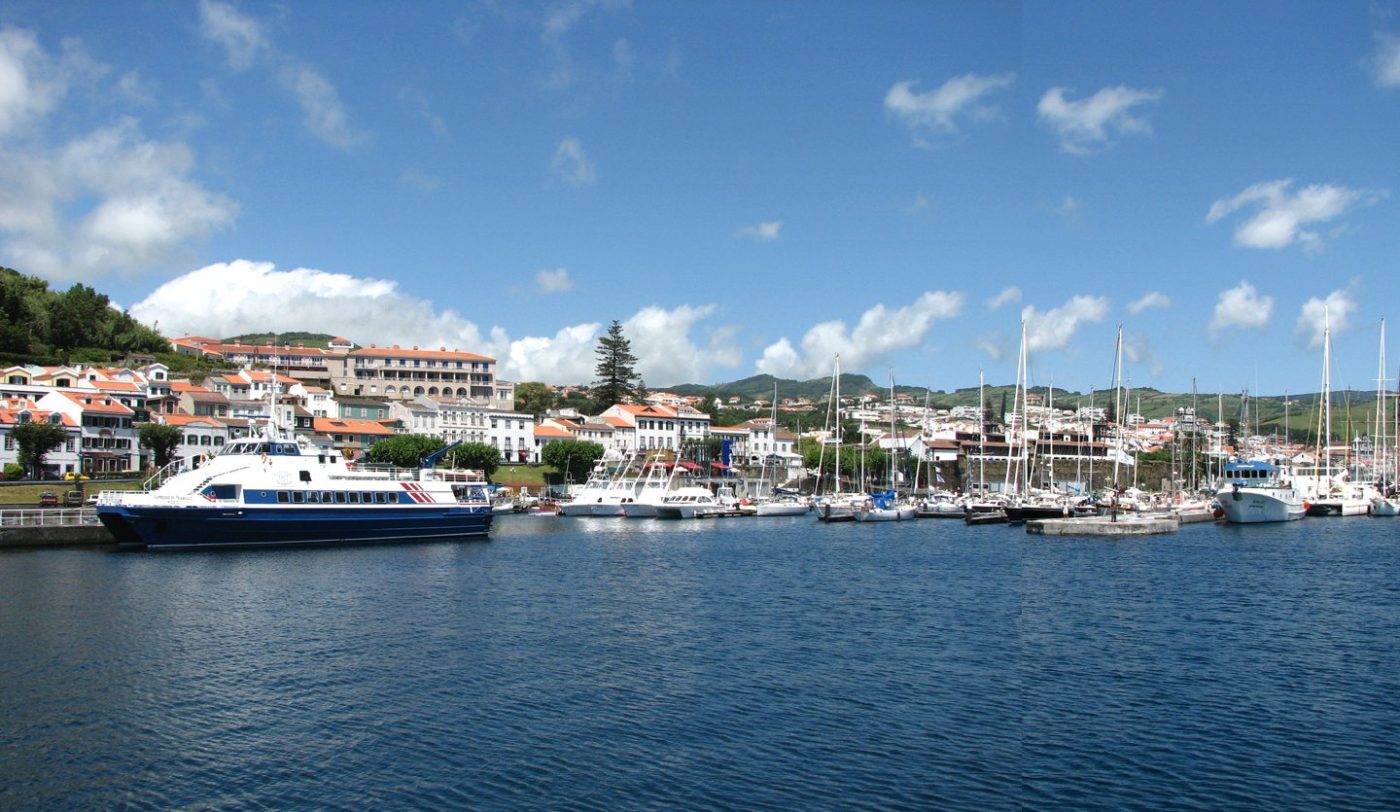
Photo: Marlene Angeja, CC BY-SA 2.0
| Getting there | Flights to Horta from Ponta Delgada, Terceira and Lisbon; 30-min ferry from Madalena on Pico |
|---|---|
| Gateway | Horta airport, or Madalena on Pico by ferry |
| Travel time | 30 min by ferry from Pico; about 1 h flight from São Miguel |
| Days | 3 to 5 nights |
| Best months | Jun–Sep warmest and calmest; hydrangeas Jun–Aug; winter wet and windy |
| Getting around | Hire a car; buses are few, and taxis offer island tours from Horta |
| Booking | Flights, cars and Horta rooms for Jul–Aug; whale trips a day or two ahead |
| Cost | Mid-range, typical for the Azores |
| Beaches | Sandy Porto Pim in Horta, dark-sand Almoxarife, lava rock pools at Varadouro |
| Sea | Atlantic Ocean |
| Archipelago | Azores |
| Area | 173 km² |
| Population | 14,331 |
| Highest point | 1,043 m (Cabeço Gordo) |
| Airport | Yes, scheduled flights |
| Car-free | No |
| Checked | October 2026 |
What is sold on Faial falls into three groups, almost all starting in Horta.
The most popular is whale and dolphin watching. Boats leave the marina for two to three hours, directed by lookouts on the cliffs who spot the blows; sperm whales and several kinds of dolphin are seen all year, with blue and fin whales passing in spring. Rigid inflatables are fast and wet, larger boats steadier. Trips start with a briefing, and some cross towards Pico, where the same whales feed. Private half days with a marine biologist, and boat trips that add snorkelling or a look at Capelinhos from the sea, are the alternatives.
The second group is island tours by minibus or 4x4 with a local guide. Half a day covers the Caldeira, Capelinhos and a viewpoint over Horta; a full day adds the villages of the north coast and lunch. These make sense if you are not driving, because public buses are rare.
The third is outdoor activity: guided walks along the crater rim and coastal paths, horse riding for experienced riders near Cedros, and paddleboard rental at Porto Pim. For most first-time visitors, the best plan is a whale-watching trip one morning and a half-day island tour or a hire car for the rest.
Horta's marina is one of the busiest yacht stops in the Atlantic, and crews crossing the ocean paint their boat names on the breakwater for luck, layer upon layer of colour. Walk the wall, then cross to Peter Café Sport, the sailors' bar on the waterfront, with its scrimshaw museum upstairs. The old town climbs behind it in churches and white houses trimmed with dark basalt.
In the middle of the island a collapsed volcano forms a crater about 2 km across and 400 metres deep, lined with cedar, ferns and moss. A road climbs about 25 minutes from Horta to the viewpoint on the rim; the walk around the edge, about 7 km, takes two to three hours and passes Cabeço Gordo, the highest point at 1,043 metres. Go early, before the clouds settle.
At the western tip, an eruption in 1957 and 1958 buried farmland and half the lighthouse under grey ash and added about 2.4 square kilometres of new land. The interpretation centre, built underground beside the lighthouse, explains the eruption and the volcanoes of the Azores; climb the lighthouse tower for the view over the ash dunes. Paths lead out across the new land towards the sea.
South of the centre of Horta, the sheltered sandy bay of Porto Pim is the town beach, calm enough for children. Beside it the old whaling factory, where sperm whales were processed until the 1970s, is now a small museum with its boilers and machinery. Walk up Monte da Guia, the green crater headland beyond, for the best view back over Horta, the marina and Pico.
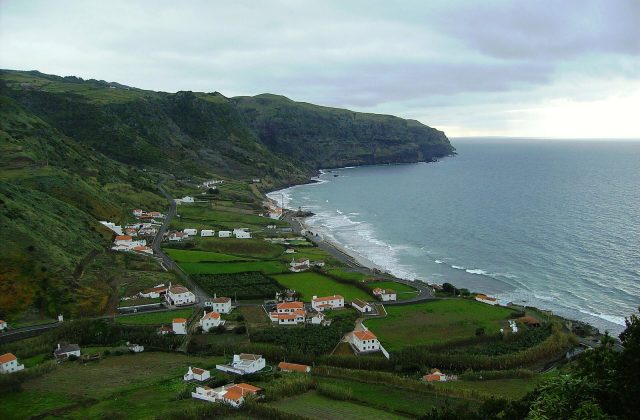
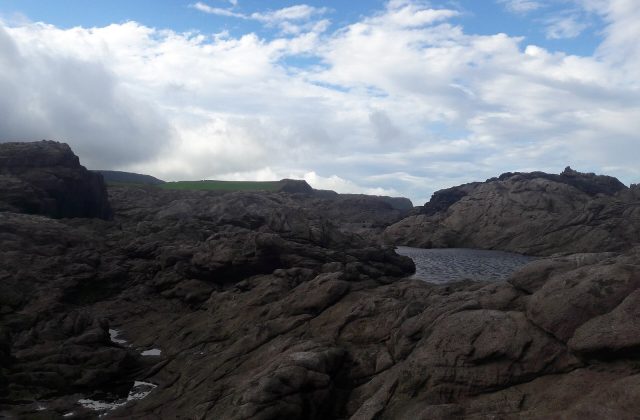
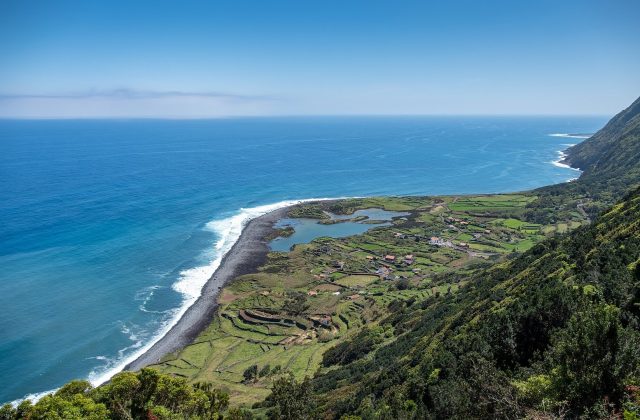
On the west coast, Varadouro has natural pools among lava ledges where locals swim in summer. Continue north through Capelo and Praia do Norte, where the lava of older eruptions reaches the sea, to Cedros and Ribeirinha, villages of hydrangea hedges, stone walls and small churches. Driving the full loop back to Horta with stops fills most of a day.
Our pick for each kind of trip, with live dates and prices. Free cancellation on most.
Best for: First visit, whales from Horta
A classic whale and dolphin trip from the marina, guided by cliff lookouts, with sperm whales likely all year and a briefing on what you see.
Faial's airport, a few kilometres west of Horta, has flights from Ponta Delgada on São Miguel and from Terceira, both under an hour, and some direct services from Lisbon, which take about two and a half hours. Inter-island flights fill early in summer.
By sea, ferries run between Horta and Madalena on Pico several times a day all year, a crossing of about 30 minutes, which makes Faial an easy addition to a stay on Pico or the other way round. Other ferries link Horta with São Jorge, more often in summer than in winter. Tickets are sold at the port and online. Many transatlantic sailors arrive by yacht, and some cruise ships call at Horta.
A hire car is the easiest way to see Faial: the roads are good and quiet, the loop around the island takes a couple of hours without stops, and parking in Horta is rarely a problem. Book ahead in summer, since the fleet is small. Local buses link Horta with the villages but run only a few times a day, which makes them impractical for the Caldeira or Capelinhos. Taxis wait in Horta and offer half-day tours at agreed prices. Horta itself is compact, and the marina to Porto Pim is a 15-minute walk.
The Azores have a mild oceanic climate, and Faial is rarely very hot or cold: summer days reach about 25 degrees and winter ones about 15. June to September is the best time, with the least rain, the calmest sea for whale trips and water around 22 or 23 degrees by August. The hydrangeas that line the roads and gave Faial its nickname, the Blue Island, flower from June to August. April and May bring migrating blue and fin whales, green fields and lower prices, though showers are frequent.
In August the Semana do Mar fills Horta with a week of regattas, concerts and food, and rooms become scarce. From November to March expect rain, wind and rough crossings, with fewer boats, though the island stays open. Clouds often hide the Caldeira, so keep a spare day. Three to five nights is enough, more if you add Pico.
Horta is the obvious base. It has most of the hotels, guesthouses and restaurants, the marina, the whale-watching departures and the ferry to Pico, and from a room on the bay you look straight at the mountain. Rural houses in villages such as Praia do Almoxarife, a few kilometres north, suit those with a car who want a beach and quiet. The west, around Capelo and Varadouro, is the most remote side, close to Capelinhos and the lava pools, with self-catering cottages and few services.
Faial was settled in the second half of the 15th century, partly by Flemish colonists led by Josse van Huerter, whose name is usually linked to the town of Horta. Its sheltered harbour shaped everything that followed: it served American whaling ships in the 19th century, then became a relay point for transatlantic telegraph cables and a stop for seaplanes crossing the ocean in the 1930s. The Capelinhos eruption of 1957 and 1958 drove many islanders to emigrate to the United States, and an earthquake in 1998 damaged villages in the north-east. Today sailing, whale watching and tourism keep the harbour busy.
Faial is one corner of the Triangle with Pico and São Jorge. Pico is 30 minutes away by ferry: climb the 2,351-metre volcano, walk the UNESCO-listed vineyards of lava walls or watch whales from Lajes. São Jorge, with its cliffs and coastal flats, is a longer crossing. Fly home via Terceira or São Miguel to add Angra do Heroísmo or the hot springs of Furnas.
Flights to Horta from Ponta Delgada, Terceira and Lisbon; 30-min ferry from Madalena on Pico.
From Horta airport, or Madalena on Pico by ferry: 30 min by ferry from Pico; about 1 h flight from São Miguel.
3 to 5 nights.
Jun–Sep warmest and calmest; hydrangeas Jun–Aug; winter wet and windy.
Hire a car; buses are few, and taxis offer island tours from Horta.
Go if you want crater walks, whale watching and a sailors' harbour town in mid-Atlantic. Skip it or choose São Miguel if you want hot springs, more beaches and more to do on a short trip, or Madeira for more reliable sun.
Mid-range, typical for the Azores.
Sandy Porto Pim in Horta, dark-sand Almoxarife, lava rock pools at Varadouro.
Flights, cars and Horta rooms for Jul–Aug; whale trips a day or two ahead.
Yes. Boat trips, guided tours and day trips for Faial can be booked online; live prices and free cancellation on most are shown on this page.
Azores, Portugal
São Miguel is the largest island of the Azores, a green volcanic island in the mid-Atlantic about two hours'…
269 tours & trips
Azores, Portugal
Santa Maria is the southernmost and oldest island of the Azores, a 97-square-kilometre island less than 100 km south of…
210 tours & trips
Azores, Portugal
Pico is the second-largest island of the Azores, a black volcanic cone rising 2,351 metres out of the Atlantic, the…
181 tours & trips
Azores, Portugal
Terceira is a green volcanic island of 400 square kilometres in the central Azores, about 1,200 km west of Lisbon,…
86 tours & trips
Azores, Portugal
Sao Jorge is a long, narrow island in the central Azores, 53 km long and only 8 km wide, a volcanic ridge with high…
15 tours & trips
Azores, Portugal
Corvo is the smallest and most northerly island of the Azores, an extinct volcano of 17 square kilometres with a single…
4 tours & trips