Sao Jorge
47 km away
Sao Jorge is a long, narrow island in the central Azores, 53 km long and only 8 km wide, a volcanic ridge with high…
15 tours & trips
Portugal · Atlantic Ocean · Volcanic island
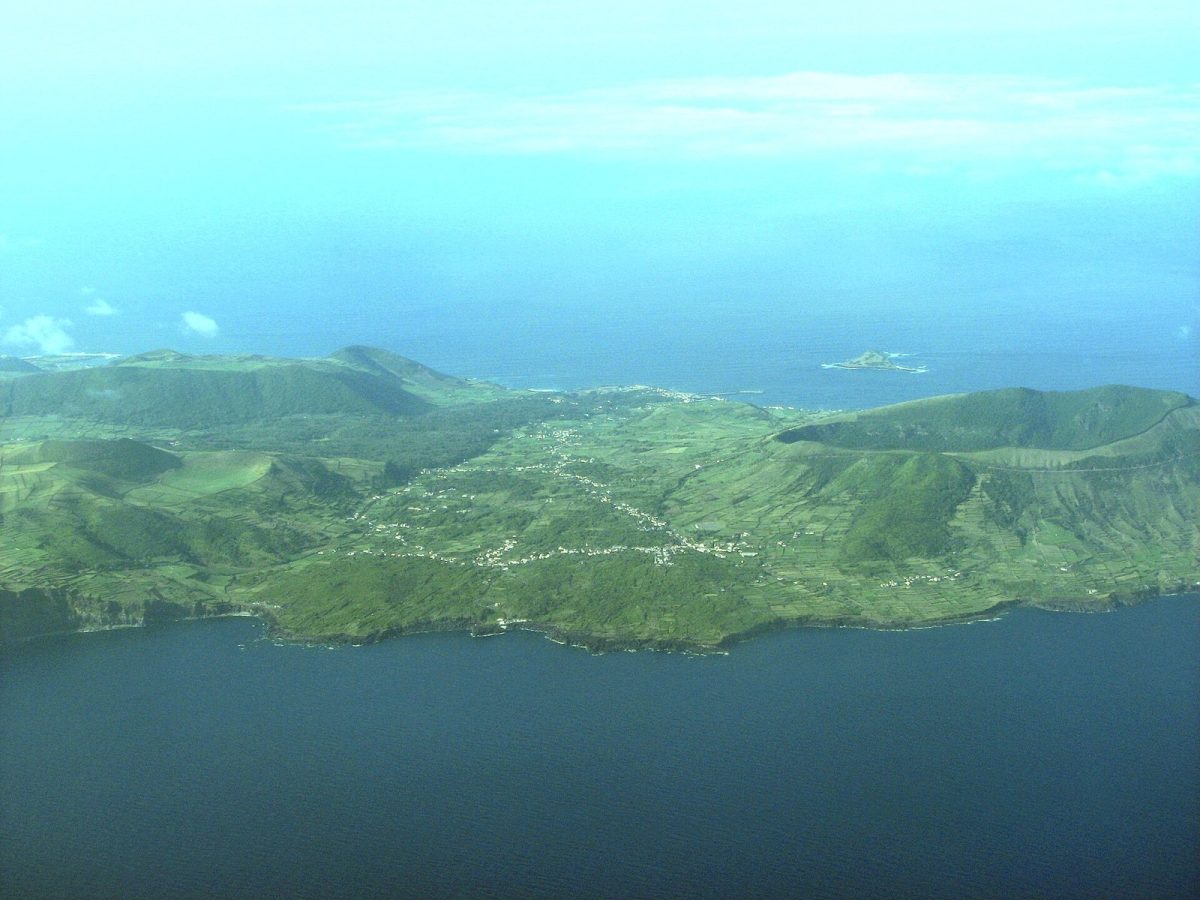
Graciosa is the northernmost island of the central Azores, only about 10 km long and 7 km wide, low and gentle compared with its neighbours. Its windmills with red caps, vineyards and white villages surround a caldera with a lake inside a vast lava cave, the Furna do Enxofre, the island's most unusual sight.
| Getting there | Short flights from Terceira and Ponta Delgada; seasonal ferries from Terceira and São Jorge |
|---|---|
| Gateway | Terceira or Ponta Delgada |
| Travel time | About 30 min by air from Terceira |
| Days | 1 to 2 nights |
| Best months | May–Sep; mild but wet and windy Oct–Apr |
| Getting around | Rent a car or bike; few buses; taxis from Santa Cruz |
| Booking | Flights and the few rental cars ahead in summer |
| Cost | Mid-range for Portugal |
| Beaches | Small sandy beach at Praia; natural rock pools at Carapacho and Santa Cruz |
| Sea | Atlantic Ocean |
| Archipelago | Azores |
| Area | 61 km² |
| Population | 4,090 |
| Highest point | 402 m |
| Airport | Yes, scheduled flights |
| Car-free | No |
| Checked | October 2026 |
Nothing is sold online for Graciosa alone. It is one of the least visited islands of the Azores, and visitors arrive independently by plane or ferry and organise their stay on the spot, usually with a rental car.
The island's main sight, the Furna do Enxofre inside the caldera, is a site with a visitor centre, set opening hours and an entry fee, and does not need booking except for groups. The Carapacho hot baths on the south-east coast take visitors for thermal pools and treatments, and you can reserve a time at the reception.
Beyond that, local operators run diving trips, mainly in summer, to reefs and wrecks off the coast, and small boats circle the islets of Praia and Baixo, where seabirds nest. Some guesthouses arrange guided walks on the waymarked trail around the caldera and to the island's highest point. These trips typically include the boat or guide and safety gear; meals are extra.
A few multi-island packages from Terceira include a day on Graciosa, but timings are tight. The better plan is to fly or sail over for one or two nights, rent a car for a day to see the caldera, the windmills and the hot baths, and spend the second day walking, cycling or diving.
Inside the caldera in the south-east, a stone tower with a spiral staircase of about 180 steps leads down into a huge lava cave, one of the largest of its kind, with a cold lake at the bottom under a high vaulted roof. Fumaroles release volcanic gases, so access is controlled. Visit around midday, when light falls through the opening.
The caldera itself, about 1.6 km across, is green and wooded, with a road tunnel leading inside to the cave. A waymarked trail circles its rim in about two hours, with views over the whole island, the windmills and the islets, and across to São Jorge, Pico and Terceira on clear days. Start from the road by the caldera entrance.
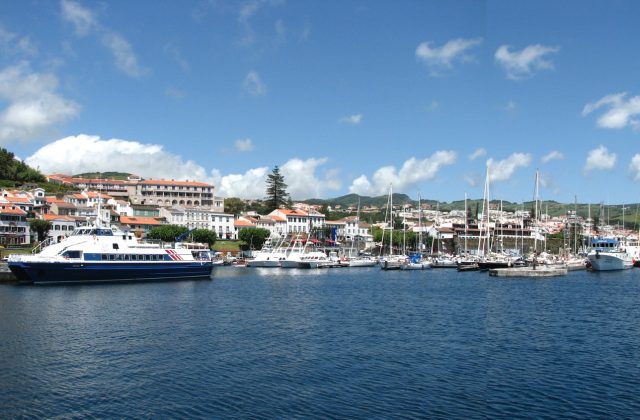
The main town has whitewashed houses with dark stone trim, old churches and two large ponds in the centre, built to store water for livestock. Above it, Monte da Ajuda carries three chapels and a former whale lookout with views over the town and harbour. Try the local sweet tarts, queijadas, and the island's white wine.
Graciosa's windmills, with their round red domes, stand on ridges across the island, especially around Guadalupe and the north coast. Some have been restored and one can be visited, and a few now serve as guest accommodation. They grind maize no longer, but they mark the island's history as a grain and wine producer for the rest of the archipelago.
At the southern tip, the small spa of Carapacho uses warm mineral springs in indoor pools, and outside there are natural rock pools for sea swimming. The cliff road nearby passes the Ponta da Restinga lighthouse and lookouts over the Ilhéu de Baixo. Combine it with the fishing village of Praia, which has the island's only real sandy beach.
Graciosa has a small airport close to Santa Cruz, served by the Azorean inter-island airline. Flights from Terceira take about half an hour, and there are connections from Ponta Delgada on São Miguel, typically about an hour, sometimes with a stop. Connections from Lisbon and other cities go through Terceira or Ponta Delgada.
Ferries call at the port of Praia, on the east coast, linking Graciosa with Terceira, São Jorge and the other central islands; services are much more frequent in summer, and crossings take several hours. Wind and swell can delay or cancel both boats and flights outside summer, so leave slack in your plans. Rental cars can be collected at the airport if booked in advance, and taxis wait for most arrivals.
The island is small, and nowhere is more than about 20 minutes' drive from Santa Cruz. A rental car gives the most freedom, but fleets are small, so book ahead in summer. Buses link the villages on a limited schedule designed for residents. Taxis are easy to arrange in Santa Cruz. Graciosa is also one of the best Azorean islands for cycling, being relatively flat, with quiet roads and short distances, though the climb into the caldera is steep.
May to September brings the most settled weather, with mild temperatures in the low to mid-twenties, the sea at about 20 to 22 degrees in late summer, and regular ferries and boat trips. July and August are the busiest, but the island never feels crowded. August is also the month of the island's main festival in Santa Cruz, with bullfights on a rope through the streets, music and food stalls.
From October to April it stays mild, but rain, wind and Atlantic swells are frequent, ferries reduce to a basic service and flights are sometimes disrupted. Graciosa is drier and lower than most Azorean islands, so it often sees less rain than its neighbours. One or two nights is enough for the main sights; stay longer for walking, diving or a slow island-hopping trip.
Santa Cruz is the natural base, with most of the guesthouses, restaurants, the main supermarket and the airport nearby, and everything else within a short drive. Praia, on the east coast, suits travellers arriving by ferry and those who want the island's sandy beach and harbour. For quiet nights in the country, look for restored rural houses and windmills in the villages of Guadalupe and Luz, or near Carapacho for the hot baths and the sea.
Portuguese navigators reached Graciosa in the fifteenth century, and settlers from mainland Portugal farmed its volcanic soil for wheat, barley and vines. Its harvests fed Terceira and other islands, which is why windmills still dot the ridges. Pirates raided the coast in the sixteenth and seventeenth centuries, and the writer Chateaubriand stopped here in 1791 on his way to America. Like the rest of the Azores, Graciosa lost much of its population to emigration to North America, and today about 4,000 people live in its villages.
Graciosa fits into a central Azores route: Terceira is the natural partner, with frequent flights and summer ferries, and São Jorge, Pico and Faial are reached by ferry in summer. A typical week combines Terceira for two or three nights, Graciosa for one or two, and São Jorge or Pico for the rest.
47 km away
Sao Jorge is a long, narrow island in the central Azores, 53 km long and only 8 km wide, a volcanic ridge with high…
15 tours & trips
70 km away
Terceira is a green volcanic island of 400 square kilometres in the central Azores, about 1,200 km west of Lisbon,…
86 tours & trips
70 km away
Pico is the second-largest island of the Azores, a black volcanic cone rising 2,351 metres out of the Atlantic, the…
181 tours & trips
Short flights from Terceira and Ponta Delgada; seasonal ferries from Terceira and São Jorge.
From Terceira or Ponta Delgada: about 30 min by air from Terceira.
1 to 2 nights.
May–Sep; mild but wet and windy Oct–Apr.
Rent a car or bike; few buses; taxis from Santa Cruz.
Go if you want a quiet, gentle island with a remarkable volcanic cave, small villages and easy walks. Skip it or choose Terceira or São Jorge if you want dramatic mountains, long hikes or more to do.
Mid-range for Portugal.
Small sandy beach at Praia; natural rock pools at Carapacho and Santa Cruz.
Flights and the few rental cars ahead in summer.
Azores, Portugal
São Miguel is the largest island of the Azores, a green volcanic island in the mid-Atlantic about two hours'…
269 tours & trips
Azores, Portugal
Santa Maria is the southernmost and oldest island of the Azores, a 97-square-kilometre island less than 100 km south of…
210 tours & trips
Azores, Portugal
Pico is the second-largest island of the Azores, a black volcanic cone rising 2,351 metres out of the Atlantic, the…
181 tours & trips
Azores, Portugal
Terceira is a green volcanic island of 400 square kilometres in the central Azores, about 1,200 km west of Lisbon,…
86 tours & trips
Azores, Portugal
Faial is a volcanic island of 173 square kilometres in the central Azores, facing the cone of Pico across a channel…
23 tours & trips
Azores, Portugal
Sao Jorge is a long, narrow island in the central Azores, 53 km long and only 8 km wide, a volcanic ridge with high…
15 tours & trips