Tenerife
Canary Islands, Spain
Tenerife is the largest of the Canary Islands, 2,034 square kilometres of Atlantic volcano off north-west Africa,…
723 tours & trips
Spain · Atlantic Ocean · Nature & wildlife island
Isla de Lobos is an uninhabited volcanic islet of under 5 square kilometres, 2 km off the northern tip of Fuerteventura in the Canary Islands, protected as a natural park since 1982. A 15-minute boat ride from Corralejo brings you to a lagoon beach, a small crater to climb, a lighthouse and a string of fishermen's huts.
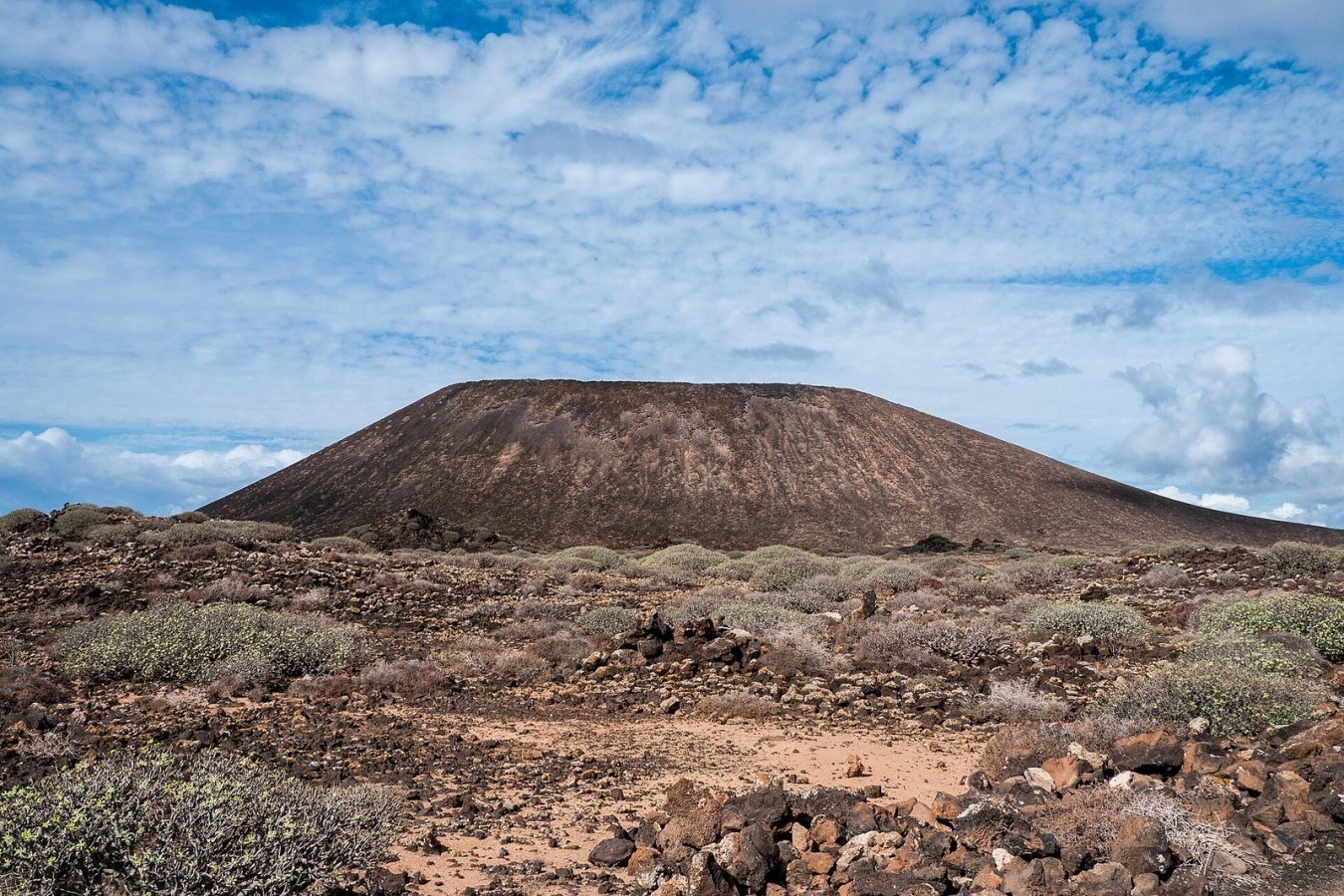
Photo: Jumilla (https://www.flickr.com/people/jumilla/), CC BY 2.0
| Getting there | Boats from Corralejo harbour on Fuerteventura in about 15 min; a free visitor permit is required |
|---|---|
| Gateway | Corralejo, Fuerteventura |
| Travel time | About 15 min by boat |
| Days | A day trip is enough |
| Best months | All year; calmest seas Apr–Oct; book the permit and boat ahead in summer |
| Getting around | Car-free: marked footpaths only; the full loop is about 3 hours on foot |
| Booking | The free park permit and a boat slot a few days ahead; book lunch on arrival |
| Cost | Mid-range; the boat is the main cost |
| Beaches | Playa de la Concha, a sheltered sandy bay; rock pools and lagoons at El Puertito |
| Sea | Atlantic Ocean |
| Archipelago | Canary Islands |
| Area | 4.7 km² |
| Population | Uninhabited |
| Highest point | 127 m (La Caldera) |
| Ferry | 15 min from Corralejo, Fuerteventura |
| Airport | No |
| Car-free | Yes |
| Checked | October 2026 |
Almost every product starts at Corralejo, the resort town at the northern tip of Fuerteventura, and there are three ways to go.
The simplest is a return boat ticket. Several small operators run fast boats or glass-bottomed boats across the strait every morning, with return sailings in the afternoon; some include the park permit, and some add a short cruise along the coast before landing. This is what most people should choose, because it gives you time to walk, swim and eat on the island.
The second option is a catamaran or sailing trip. These circle Lobos, anchor off the coast for swimming, snorkelling and paddleboarding, and serve lunch and drinks on board; some land for a short time, others do not land at all. Adults-only and sunset versions exist, and private sailing boats suit groups.
The third group adds a guide: walking tours of the islet, snorkelling with gear and instruction, or bus and boat packages from resorts further south such as Caleta de Fuste and from Lanzarote via the ferry to Corralejo.
Check whether the permit is included. For a first visit, take a return boat early and walk the island before the midday heat.
A curved bay of pale sand on the west side, sheltered by a lava reef, with shallow, clear turquoise water ideal for swimming and children. It is about 30 to 40 minutes on foot from the jetty along a flat path. There is no shade, no facilities and no lifeguard, so bring an umbrella, food and plenty of water.
The volcanic cone in the south-west is the island's high point at 127 metres. A path climbs to the rim in about 20 minutes from its foot, and the view sweeps over the half-drowned crater, the dunes of Corralejo, and across to Lanzarote. Keep to the marked path: the slopes are loose and the vegetation protected.
A cluster of fishermen's huts near the jetty, around shallow natural pools and lagoons that are good for a dip and for spotting small fish. The island's single restaurant is here, famous for its paella; put your name down when you arrive if you want to eat. The small visitor centre nearby explains the park.
The lighthouse at the northern tip, about an hour's walk from the jetty across lava fields and sand, was home to the island's last permanent residents, the keeper and his family. From the headland you look across to Lanzarote and the open Atlantic. The path continues round, making a loop of about 3 hours with the crater.
The waters around Lobos are part of the protected area, and snorkelling off La Concha or El Puertito shows rays, parrotfish and shoals of bream over sand and rock. Inland, a small salt marsh, Las Lagunitas, fills with water at high tide and draws wading birds, and remains of old salt pans lie near the shore.
Our pick for each kind of trip, with live dates and prices. Free cancellation on most.
Best for: First visit, on your own
A return boat from Corralejo with the park entry included, so you can walk and swim at your own pace and come back on a later boat.
Lobos is reached only by boat from Corralejo harbour, in the north of Fuerteventura. Several companies run crossings of about 15 minutes, with departures through the morning and returns through the afternoon; services are frequent in summer and fewer in winter, and are cancelled when the sea is rough. Buy tickets at the harbour kiosks or in advance.
Visitors need a free permit from the island government for a morning or afternoon slot, and daily numbers are capped, so book it a few days ahead in high season; some boat tickets include it.
Fuerteventura airport is about 40 minutes by road from Corralejo, and ferries from Playa Blanca on Lanzarote take about 30 minutes. Leave the car in Corralejo.
You walk. There are no roads, vehicles or bikes for visitors, only marked paths of sand and lava, mostly flat apart from the crater climb. The main loop, from the jetty to the lighthouse, the crater and La Concha, is about 8 to 9 km and takes about three hours. There is no shade and no drinking water outside the restaurant, so carry at least two litres each in summer, along with a hat and closed shoes.
Lobos can be visited all year, as the Canaries are mild in every season. Air temperatures range from about 20 degrees in winter to the high 20s in summer, and the sea from about 18 degrees in February to 23 degrees in September.
From April to October the sea is usually calmest for the crossing and for snorkelling, but the trade winds blow hard in July and August, and summer and school holidays bring the most visitors, so book the permit and boat early. Winter brings occasional Atlantic swells that cancel boats; check before you go.
Go early in the day: the island is hottest and most crowded around midday, and the first boats give you the paths to yourself. A morning or afternoon slot is enough for most visitors.
No one can stay overnight on Lobos except in rare cases, so you sleep on Fuerteventura. Corralejo is the obvious base, a resort town with hotels, apartments, restaurants, the harbour and the dunes of its natural park on the doorstep. Lajares and El Cotillo, inland and on the west coast, are quieter, with surf beaches and lagoons, and are about 20 minutes away by car. Further south, Caleta de Fuste has resorts and package trips.
The islet takes its name from the sea wolves, the Mediterranean monk seals that lived on its shores until they were hunted out. In 1405 the Norman conqueror Jean de Bethencourt used it as a base during his conquest of Fuerteventura. Fishermen later built huts at El Puertito, salt was made from the marsh, and a lighthouse was lit at Punta Martino in the 19th century. When the light was automated in the 1960s its keeper's family left, and since 1982 Lobos has been a protected natural park.
Combine Lobos with the dunes of Corralejo Natural Park, next to the town, and the beaches and lagoons of El Cotillo. The ferry from Corralejo reaches Playa Blanca on Lanzarote in about 30 minutes, making a day trip to the Timanfaya volcanoes possible, and La Graciosa, another car-free islet, lies off Lanzarote's northern tip.
Boats from Corralejo harbour on Fuerteventura in about 15 min; a free visitor permit is required.
From Corralejo, Fuerteventura: about 15 min by boat.
A day trip is enough.
All year; calmest seas Apr–Oct; book the permit and boat ahead in summer.
No. Isla de Lobos is car-free. Car-free: marked footpaths only; the full loop is about 3 hours on foot.
Go if you want an easy half-day of walking, swimming and snorkelling on a protected desert islet near Corralejo. Skip it or choose La Graciosa off Lanzarote if you want to stay overnight, eat out and explore a larger island. With about 15 min each way from Corralejo, Fuerteventura, a day trip is easy to do.
Mid-range; the boat is the main cost.
Playa de la Concha, a sheltered sandy bay; rock pools and lagoons at El Puertito.
The free park permit and a boat slot a few days ahead; book lunch on arrival.
Yes. Boat trips, guided tours and day trips for Isla de Lobos can be booked online; live prices and free cancellation on most are shown on this page.
Canary Islands, Spain
Tenerife is the largest of the Canary Islands, 2,034 square kilometres of Atlantic volcano off north-west Africa,…
723 tours & trips
Canary Islands, Spain
Gran Canaria is a round volcanic island of 1,560 square kilometres in the Canaries, rising from the dunes of Maspalomas…
350 tours & trips
Canary Islands, Spain
Lanzarote is the easternmost of the Canary Islands, about 125 km off the coast of Africa, a low island of black lava…
273 tours & trips
Canary Islands, Spain
Fuerteventura is the second-largest of the Canary Islands and the closest to Africa, about 97 km off the Moroccan…
233 tours & trips
Canary Islands, Spain
La Palma is the most north-westerly of the Canary Islands, a steep green volcanic island of about 708 square kilometres…
76 tours & trips
Canary Islands, Spain
La Gomera is one of the smallest Canary Islands, a round volcanic island about 22 km across, cut by deep ravines and…
16 tours & trips