Ishigaki
Yaeyama Islands, Japan
Ishigaki is a subtropical island in the far south of Japan, about 400 km south-west of Okinawa's main island and…
55 tours & trips
Japan · Seas of Japan & Korea · Historic island
Taketomi is a tiny, flat coral island 4 km south of Ishigaki in Okinawa's Yaeyama group, with a single village of red-tiled houses, coral-stone walls and white sand lanes that looks much as Ryukyu villages did a century ago. Only about 5 square kilometres in size, it is an easy half-day by ferry and bicycle.
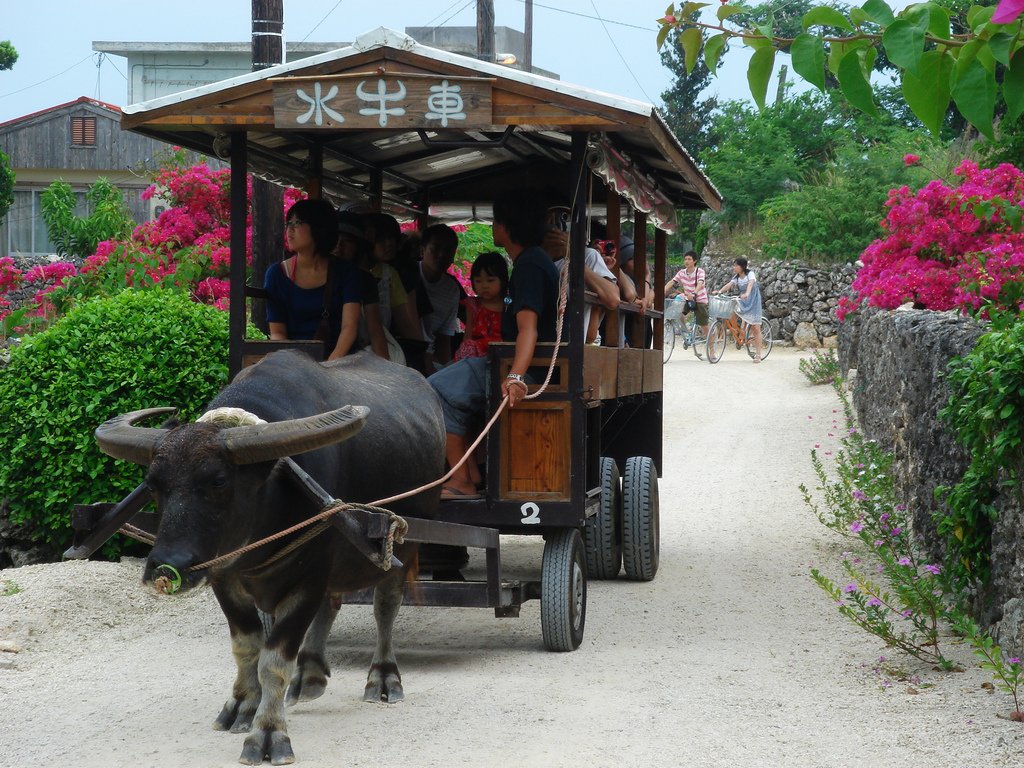
Photo: Flickr user: Ken@Okinawa Okinawa, Japan https://www.flickr.c, CC BY-SA 2.0
| Getting there | Ferry from Ishigaki port in 10 to 15 min, departures roughly every half hour in daytime |
|---|---|
| Gateway | Ishigaki (Remote Island Terminal) |
| Travel time | 10 to 15 min by ferry |
| Days | A day trip is enough |
| Best months | Apr–Jun and Oct–Nov; Jul–Sep hot with typhoon risk; rainy season May–June |
| Getting around | Rent a bicycle at the port; a buffalo cart through the village; no car needed |
| Booking | Nothing far ahead except overnight rooms in peak season; ferries and bikes on the day |
| Cost | Mid-range for Okinawa; day trips are cheap |
| Beaches | Shallow white-sand lagoon at Kondoi for swimming; Kaiji beach for star sand, no swimming |
| Sea | Seas of Japan & Korea |
| Archipelago | Yaeyama Islands |
| Area | 5.4 km² |
| Population | 323 (2012) |
| Highest point | 21 m |
| Ferry | 15 min from Ishigaki (Remote Island Terminal) |
| Airport | No |
| Car-free | No |
| Checked | October 2026 |
Taketomi itself needs no tour: the ferry from Ishigaki is short and frequent, bikes are rented at the pier and the village can be explored without a guide. What is sold online for the island mostly packages it with something else.
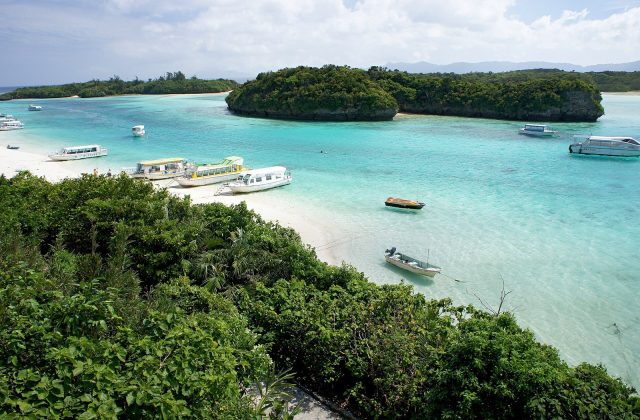
The most useful products are combination days from Ishigaki. A typical one starts with snorkelling over the reef or on a sandbar, or a paddleboard or canoe trip through the mangroves or across Kabira Bay, then drops you on Taketomi for a few hours of free time. Transport, equipment, a guide for the water part and sometimes the ferry ticket are included; buffalo cart rides, bike hire and lunch are normally paid on the spot.
Several tours that start on Taketomi actually head to Iriomote, the large jungle island to the west, for photo walks, cultural visits, firefly viewing in early summer or snorkelling at the coral sandbar of Barasu. They suit visitors staying on Taketomi who want an excursion.
Recommendation: if you only have a day, take the ferry yourself, rent a bike and swim at Kondoi. Book a combination tour only if you also want snorkelling or paddling without arranging boats separately.
The village in the centre of the island is the reason to come: low wooden houses under red tiles held with white mortar, shisa lion figures on the roofs, walls of stacked coral stone and lanes of raked white sand. Rules keep out concrete and modern signs. Ride or walk slowly, and remember that people live in these houses.
On the west coast, a ten-minute ride from the village, Kondoi is the island's swimming beach: very shallow, calm turquoise water over white sand, with a sandbar that appears offshore at low tide. It has toilets and showers in season but little shade. Bring water and sun protection, and watch the tide if you wade out to the sandbar.
Just south of Kondoi, Kaiji is known for star sand, tiny star-shaped shells of single-celled sea creatures that collect in the sand. Press your palm onto the beach and look closely to find them. Swimming is not allowed because of strong currents, but the shaded beach under the trees is a pleasant spot to rest.
Water buffalo pull carts slowly through the village lanes while the driver tells stories and often plays the sanshin, the three-stringed Okinawan lute, and sings folk songs. The ride takes about half an hour and is the classic Taketomi experience, popular with families. The operators start near the village and pick up from the port.
The old stone pier on the west coast, once the island's landing place, runs out into the shallow sea and is the place to watch the sun go down towards Kohama and Iriomote. It is a short ride from Kondoi. Stay on the island overnight, or check the last ferry time, before you wait for sunset.
Our pick for each kind of trip, with live dates and prices. Free cancellation on most.
Best for: A day of snorkelling plus the village
Combines a snorkelling stop on a sandbar off Ishigaki with free time on Taketomi, a sensible way to see both the reef and the old village in one day.
Taketomi is reached only by sea. Ferries leave from the Remote Island Terminal in Ishigaki town, a short walk from the city centre, and take 10 to 15 minutes. Two companies run frequent daytime services, roughly every half hour from early morning to early evening, and you buy tickets at their counters in the terminal without booking ahead. In bad weather, especially when a typhoon approaches, sailings can be cancelled.
Ishigaki has the region's airport, with direct flights from Naha in about an hour and from Tokyo, Osaka and other Japanese cities. A bus links the airport with the ferry terminal in about 30 to 45 minutes. Cars cannot be taken to the island, and you do not need one. Leave luggage in lockers at the terminal or at your Ishigaki hotel.
Taketomi is small enough to cycle around in an hour, with a ring road of about 9 km and sandy lanes through the village. Bicycle rental companies wait at the port with free shuttles to their shops in the village; electric bikes are offered too. Walking from the port to the village takes about 20 minutes. There are no buses or taxis to speak of, and the island is almost car-free in practice.
Taketomi is subtropical. April to June brings warm weather, but the rainy season usually runs from early May to late June, with heavy showers rather than constant rain. July to September is hot and humid, with sea temperatures near 29 degrees and the clearest water, but typhoons can close ferries for a day or more, so keep travel plans flexible.
October and November are perhaps the best months, with warm sea, lower humidity and fewer visitors. Winter, from December to February, is mild at around 18 to 22 degrees but often cloudy and windy, too cool for many to swim, yet good for cycling the village.
Japanese holidays in late April and early May and the mid-August Obon period bring crowds. The Tanadui seed-sowing festival in autumn features days of traditional dances. A half day is enough for most visitors; stay overnight to see the village quiet.
Most people stay on Ishigaki and visit Taketomi as a day trip, which gives the widest choice of hotels, restaurants and onward ferries. Sleeping on Taketomi is worthwhile if you want the village after the day visitors leave: there are family-run guesthouses inside the village, usually with dinner included, and one upscale resort of traditional-style villas. Rooms are few, so book well ahead for holidays and summer.
Taketomi was part of the Ryukyu Kingdom, and its people paid a heavy poll tax in rice and woven cloth during the centuries when the kingdom was under the control of Satsuma. Lacking rivers and good soil, islanders farmed millet, wove textiles and lived from the reef. In the 1970s residents chose to protect their village, and in 1987 it was designated one of Japan's preservation districts for traditional buildings, which keeps its houses, walls and sand lanes looking as they do today.
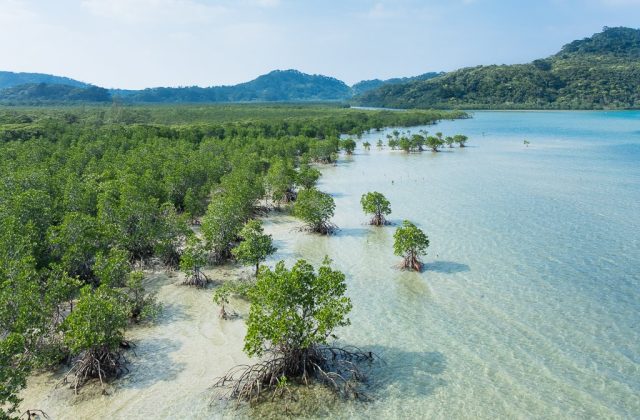
Taketomi pairs naturally with the other Yaeyama islands, all served from the same Ishigaki terminal. Iriomote, with its jungle rivers and mangroves, is about 40 to 50 minutes by fast ferry, Kohama about 25 minutes and Kuroshima about 30. Many visitors base themselves on Ishigaki for four or five days and take a different island each day.
Ferry from Ishigaki port in 10 to 15 min, departures roughly every half hour in daytime.
From Ishigaki (Remote Island Terminal): 10 to 15 min by ferry.
A day trip is enough.
Apr–Jun and Oct–Nov; Jul–Sep hot with typhoon risk; rainy season May–June.
Rent a bicycle at the port; a buffalo cart through the village; no car needed.
Go if you want to cycle through the best-kept traditional Okinawan village and swim in a shallow turquoise lagoon. Skip it or choose Iriomote if you want jungle, rivers and real hiking, or Kohama if you prefer resort beaches over sightseeing. With about 15 min each way from Ishigaki (Remote Island Terminal), a day trip is easy to do.
Mid-range for Okinawa; day trips are cheap.
Shallow white-sand lagoon at Kondoi for swimming; Kaiji beach for star sand, no swimming.
Nothing far ahead except overnight rooms in peak season; ferries and bikes on the day.
Yes. Boat trips, guided tours and day trips for Taketomi can be booked online; live prices and free cancellation on most are shown on this page.
Yaeyama Islands, Japan
Ishigaki is a subtropical island in the far south of Japan, about 400 km south-west of Okinawa's main island and…
55 tours & trips
Yaeyama Islands, Japan
Iriomote is the largest of Japan's Yaeyama Islands, a mountainous island of subtropical jungle and mangrove rivers…
12 tours & trips
Yaeyama Islands, Japan
Yonaguni is the westernmost island of Japan, a hilly island of about 29 square kilometres in the Yaeyama group, just…
2 tours & trips