Rügen
123 km away
Rügen is Germany's largest island, 926 square kilometres of chalk cliffs, beech forest, lagoons and long sandy…
5 tours & trips
Denmark · Baltic Sea · Nature & wildlife island
Bornholm is a Danish island in the middle of the Baltic, south of Sweden and much closer to it than to Copenhagen, with granite cliffs in the north, white sand in the south and the largest medieval castle ruin in northern Europe. It covers about 588 square kilometres and is known for round churches, smokehouses and sunshine.
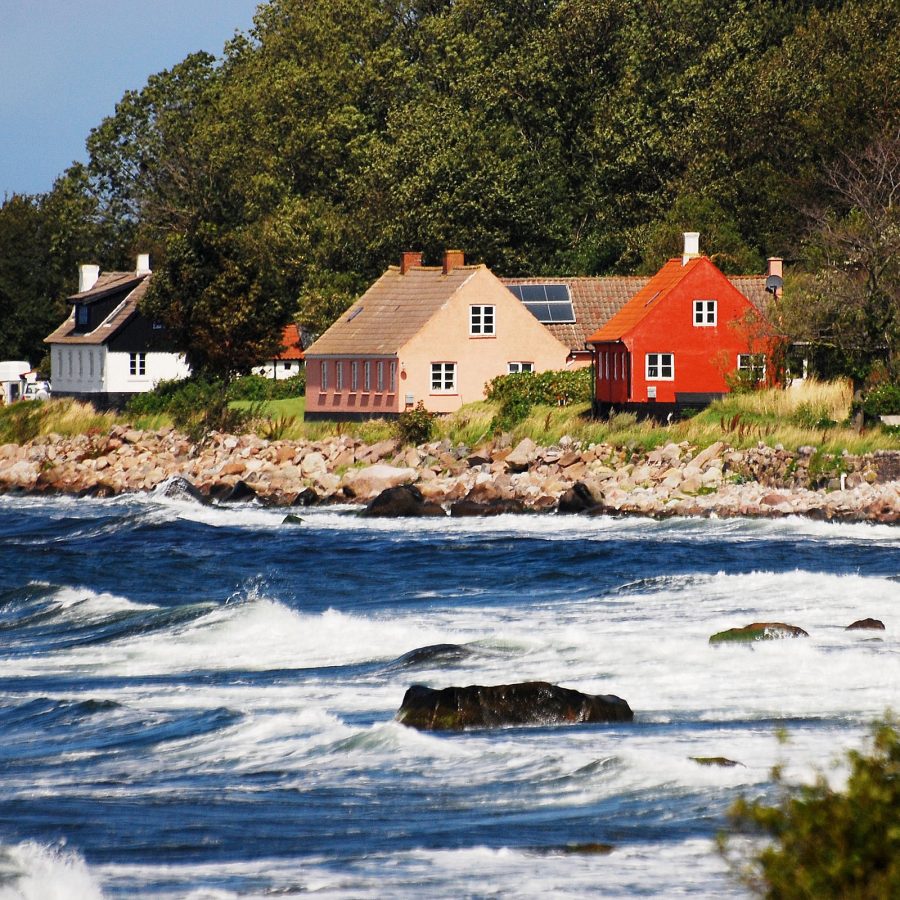
Photo: Kent Madsen, CC BY-SA 3.0
| Getting there | Fast ferry from Ystad in Sweden 80 min, linked by train from Copenhagen; night ferry from Køge; flights |
|---|---|
| Gateway | Ystad (fast ferry); Rønne airport |
| Travel time | 80 min by fast ferry or 35 min by air from Copenhagen |
| Days | 3 to 5 nights |
| Best months | Jun–Aug warmest; May and Sep quieter; many places close Oct–Apr |
| Getting around | Bike on the cycle routes, or drive; buses link all towns, more often in summer |
| Booking | Ferry car space and summer houses for July months ahead; restaurants on weekends |
| Cost | Mid-range for Denmark, so pricey by European standards |
| Beaches | Fine white sand at Dueodde in the south; rocky coves in the north; Sandvig and Balka family beaches |
| Sea | Baltic Sea |
| Area | 588 km² |
| Population | 39,632 (2018) |
| Highest point | 162 m (Rytterknægten) |
| Ferry | 1 h 20 min from Ystad (fast ferry); Rønne airport |
| Airport | Yes, scheduled flights |
| Car-free | No |
| Checked | October 2026 |
Nothing is sold online for Bornholm on its own, and most visitors travel independently: they take the ferry with a car or a bike, rent a holiday house and explore at their own pace. The island is easy to organise, with good roads, signposted cycle routes and buses.
What is offered locally is mostly small-scale. Boat trips from Gudhjem go out to the tiny fortified islands of Christiansø, and summer boats from Sandvig and Gudhjem sail along the northern cliffs to see the rock formations from the sea. Guided walks run in summer at Hammershus and in the forests, and the larger museums offer tours. Bike rental is available in all the main towns, including electric bikes. Food and drink are a draw in their own right: smokehouses, small breweries, a distillery, cheese makers and farm shops can be visited without booking, and some offer tastings.
Copenhagen agencies sell day trips by train and fast ferry, which give five or six hours on the island, usually Rønne, Hammershus and a smokehouse. This is a sample at best: the travel time eats most of the day.
The plain recommendation is to come for at least three nights, base yourself on the north or east coast, and bring or rent a bike.
On a granite cliff at the north-western tip, the ruined castle is the largest medieval fortress in northern Europe, with walls, towers and gateways spread along the ridge above the sea. A modern visitor centre explains its history. Walk down to the coast path afterwards and follow it towards the Hammeren headland and Sandvig, about an hour on foot.
Bornholm has four medieval round churches, built in the 12th century as both places of worship and refuges against raiders, with thick white walls and conical roofs. Østerlars, the largest, has wall paintings inside; Nylars, Olsker and Nyker are smaller. They are spread across the island, so link two or three on a day by bike or car.
The fishing village on the north-east coast climbs a steep slope above a tiny harbour, with half-timbered houses and the tall white chimneys of the herring smokehouses. Order the local smoked herring on rye with raw egg yolk and radish. From here, a coast path leads north to the sea cliffs of Helligdommen and the art museum.
The easternmost town in Denmark is a compact place of yellow and red merchants' houses round a harbour, known for its craft workshops, glass-blowers, smoked fish, liquorice, caramels and a brewery. Stroll the streets and the rocky shoreline. In the evening, sit on the harbour wall and watch the light fade over the Baltic.
At the southern tip, a long beach of very fine white sand is backed by dunes and pine forest, with a lighthouse you can climb. The water is shallow and good for children, though it stays cool. It is the island's classic summer beach; walk away from the main access path to find space even in July.
In the middle of the island lies one of the largest forests in Denmark, with lakes, walking and cycling trails, and the rift valley of Ekkodalen. European bison were introduced here in 2012 and can be seen from a walkway on the edge of their enclosure. The highest point of the island, at 162 metres, lies nearby.
The quickest route from Copenhagen is by train or bus across the Øresund Bridge to Ystad in southern Sweden, about 1 hour 15 minutes, then the fast ferry to Rønne, which takes about 80 minutes and runs several times a day; combined tickets are sold. Cars and bikes go on the ferry. A slower overnight ferry from Køge, south of Copenhagen, avoids Sweden and suits drivers. In summer, ferries also run from Sassnitz in Germany and from Poland. Flights from Copenhagen to Rønne take about 35 minutes and run several times a day. Book car space for July well ahead. The Baltic can be rough in autumn and winter, but cancellations are rare. Everything arrives in Rønne, the main town on the west coast.
The island is about 40 km across, and a network of signposted cycle routes, many on old railway lines, makes cycling the classic way to get around; the north is hilly, the south flatter. Bikes and electric bikes are easy to rent. A car gives more freedom, and parking is simple outside the busy summer harbours. Buses connect Rønne with all the towns and villages, running frequently in summer and less often in winter. Walking the coast path is another way to see the north and east shores.
June to August is the main season, with long light evenings, daytime temperatures around 20 degrees and sea water reaching 17 to 19 degrees by late July. Bornholm is one of the sunniest places in Denmark, and the rocks store heat into early autumn. July is the peak, when Danish families fill the summer houses and the ferries, and prices rise; early June and late August are calmer and still warm.
May and September are good for cycling and walking, with fewer people, though the sea is cool and some restaurants keep shorter hours. From October to April the island is quiet: many shops, cafes and summer houses close, the weather is windy and grey, and buses run less often, but Rønne and the main museums stay open. In June the island hosts a political festival that fills Allinge for several days, so book early if you come then. Plan three to five nights to see both the rocky north and the sandy south.
Rønne, the main town, has the ferry terminal, the airport and the widest choice of hotels, and suits travellers without a car. The north around Allinge, Sandvig and Gudhjem is best for walkers and for the cliffs and Hammershus. Svaneke and the east coast are quieter, with good food and harbours. For beaches and families, the south between Balka and Dueodde has campsites and summer houses near the sand. Holiday houses are the local way to stay and are booked months ahead for July.
Bornholm's position in the Baltic made it a prize: Danish kings, the archbishops of Lund, the city of Lübeck and Sweden fought over it, and Hammershus and the fortified round churches recall those centuries. In 1658 Denmark surrendered the island to Sweden, but a local uprising in 1660 returned it. Fishing, granite quarrying and pottery built its towns. At the end of the Second World War Soviet planes bombed Rønne and Nexø, and Soviet troops stayed until 1946. Today tourism, crafts and food production sustain the island.
Bornholm pairs naturally with Copenhagen, about three hours away by train and fast ferry or 35 minutes by air. From Gudhjem, boats reach the tiny fortified islands of Christiansø in about an hour. Arriving via Ystad also lets you add southern Sweden, with Malmö and the coast of Österlen, and summer ferries from Sassnitz link it with the German island of Rügen.
123 km away
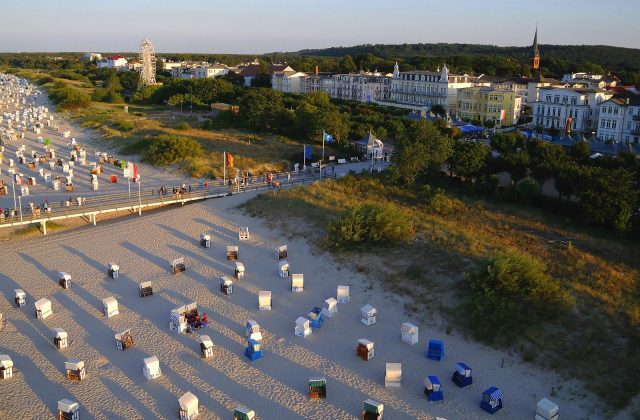
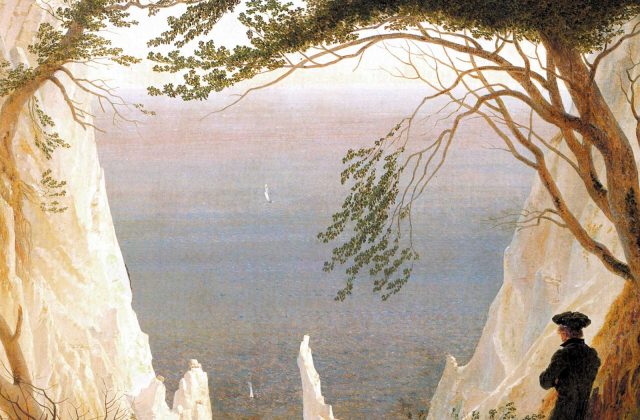
Rügen is Germany's largest island, 926 square kilometres of chalk cliffs, beech forest, lagoons and long sandy…
5 tours & trips
143 km away
Usedom is a 445-square-kilometre island on the Baltic coast, divided between Germany and Poland, with about 40 km of…
14 tours & trips
306 km away
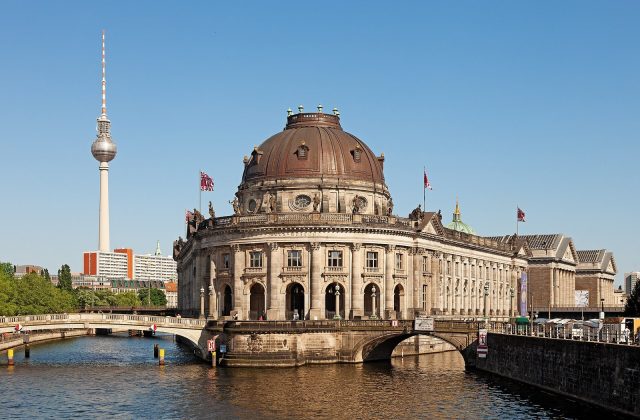
Museum Island is the northern half of an island in the river Spree in the centre of Berlin, home to five great museums…
9 tours & trips
Fast ferry from Ystad in Sweden 80 min, linked by train from Copenhagen; night ferry from Køge; flights.
From Ystad (fast ferry); Rønne airport: 80 min by fast ferry or 35 min by air from Copenhagen.
3 to 5 nights.
Jun–Aug warmest; May and Sep quieter; many places close Oct–Apr.
Bike on the cycle routes, or drive; buses link all towns, more often in summer.
Go if you like cycling, coastal walks, medieval castles and round churches, smoked fish and long sandy beaches in a calm, well-organised setting. Skip it if you want warm sea or reliable heat, or if you have only a day, as the island deserves several. With about 1 h 20 min each way from Ystad (fast ferry); Rønne airport, a day trip is easy to do.
Mid-range for Denmark, so pricey by European standards.
Fine white sand at Dueodde in the south; rocky coves in the north; Sandvig and Balka family beaches.
Ferry car space and summer houses for July months ahead; restaurants on weekends.