Museum Island
20 km away
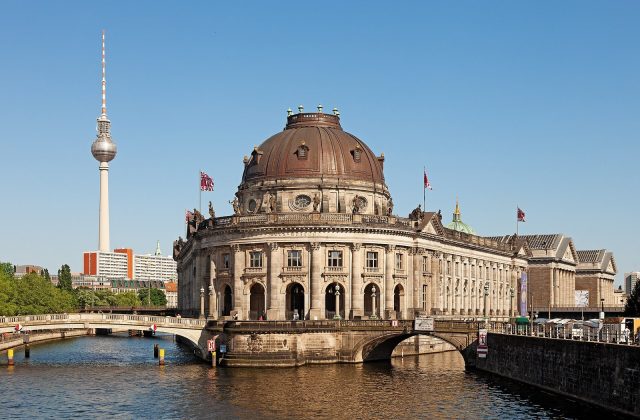
Museum Island is the northern half of an island in the river Spree in the centre of Berlin, home to five great museums…
9 tours & trips
Germany · Lakes & rivers · Historic island
Pfaueninsel, Peacock Island, is a wooded island of 67 hectares in the River Havel on the south-western edge of Berlin, laid out by Prussian kings as a romantic park with a toy-like white castle. Peacocks roam freely, cars and dogs are banned, and the island is part of the Potsdam and Berlin World Heritage palaces and parks.
| Getting there | 2-min ferry from the Pfaueninsel jetty in Wannsee; S-Bahn to Wannsee then bus 218 |
|---|---|
| Gateway | Berlin-Wannsee (ferry) |
| Travel time | 2 min by ferry; about 1 h from central Berlin |
| Days | A half-day trip is enough |
| Best months | Apr–Oct; roses and peacock displays May–June; quiet and bare in winter |
| Getting around | Car-free: walk the paths; bicycles and dogs are not allowed |
| Booking | Nothing ahead; castle tours on the day in season |
| Cost | Budget: a small ferry fare covers the entry |
| Beaches | No beaches and no swimming on the island |
| Sea | Lakes & rivers |
| Area | 0.7 km² |
| Highest point | 45 m |
| Airport | No |
| Car-free | Yes |
| UNESCO | Palaces and Parks of Potsdam and Berlin |
| Checked | October 2026 |
Nothing is sold online for Pfaueninsel as a tour, and none is needed. The island is a simple self-guided outing from Berlin: S-Bahn and bus to the ferry jetty, a two-minute crossing, and a few hours walking in the park. The small ferry fare includes entry to the island grounds.
The castle, when open, can be visited on guided tours lasting about half an hour, with a separate ticket bought on the island; numbers are limited, so arrive earlier in the day in summer. Information boards in German and English explain the buildings and the landscape design, and the state palace foundation sometimes offers themed garden walks.
Many boat cruises on the Wannsee and the Havel pass the island, and some summer routes from Wannsee or Potsdam stop nearby, but they usually do not land on the island itself. Bicycle tours of the Wannsee area often end at the ferry, leaving the bikes on the shore.
Our advice: combine the island with Glienicke Palace or a Wannsee walk, bring a picnic to eat on the mainland side, and visit on a weekday morning from May to September.
At the south-west tip stands the small white palace built in the 1790s for King Frederick William II and his mistress, made to look like a ruined medieval castle, with two towers linked by a cast-iron bridge. Inside are rooms decorated in the style of the time. Check whether it is open, as it has had long restoration closures.
Several dozen peacocks wander the lawns and perch on roofs and trees, their calls echoing across the island; in spring the males display their tails. The landscape park, reshaped by Peter Joseph Lenné in the nineteenth century, mixes open meadows, old oaks and views across the Havel. Walking round the island takes about an hour.
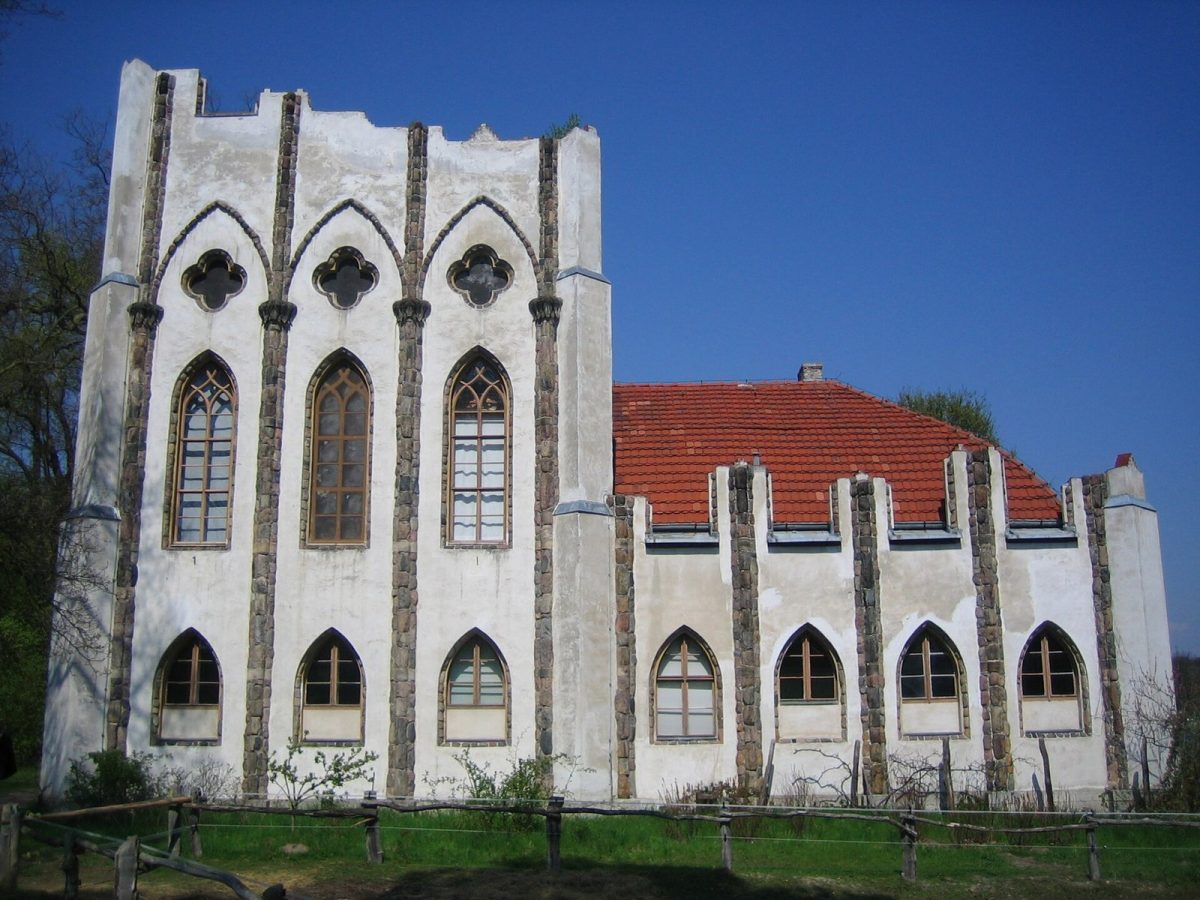
At the northern end of the island, about a 20-minute walk from the ferry, the dairy was built in the 1790s as a Gothic ruin, with a pointed window facing the river. Around it are fields where old breeds of cattle and sheep graze, keeping the island's farm tradition alive. It is a good place to rest on a bench before walking back along the western shore.
In the middle of the island, this house for court guests has a late Gothic facade taken from a merchant's house in Danzig and attached in the 1820s, an early example of saving historic architecture by moving it. Nearby are the site of Johann Kunckel's glass laboratory, where ruby glass was made in the 1680s, and a small rose garden.
A small classical temple honouring Queen Louise stands in a clearing near the shore, with views towards the Russian-style church of Nikolskoe on the far bank. Benches along the riverside paths face the Havel, where sailing boats and excursion ships pass. In the late afternoon light the water and woods are especially beautiful.
From central Berlin, take the S-Bahn to Wannsee station, about 30 to 40 minutes, then bus 218 to its terminus at Pfaueninsel, about 15 minutes. In summer the bus can be crowded; the walk through the woods from Wannsee takes about an hour. Berlin public transport tickets for the outer zone cover the train and bus, but not the ferry.
The ferry crosses the narrow channel in about two minutes, running all year at frequent intervals in summer and less often in winter, with the last boat back in the early evening; check the time so you are not stranded. There is a small car park at the jetty that fills quickly at weekends. Cyclists must leave their bikes on the mainland side.
The island is walked on foot only, along gravel paths that loop round it and cross the middle. Bicycles, dogs and smoking are not allowed, and the meadows and woods are a nature reserve, so keep to the paths. Distances are short: from the ferry to the castle is five minutes, and to the dairy at the far end about 20. Facilities on the island are few; a restaurant and toilets stand by the jetty on the mainland side.
The island is open all year, but the castle and other buildings open only in the warmer months, roughly April to October, and opening hours of the grounds are shorter in winter. May and June are the best time, with fresh green, roses in bloom and peacocks displaying; July and August are warm and busy at weekends, when queues for the ferry can be long.
September and October bring autumn colours and fewer visitors. In winter the island is quiet and atmospheric, though bare, and on cold days the peacocks take shelter. Berlin weather can change quickly, so bring a layer even in summer, and sturdy shoes if it has rained. A half-day is enough; combine it with nearby sights to make a full day.
There is no accommodation on the island, so stay in Berlin and visit for the day. The south-western districts such as Wannsee and Zehlendorf are closest, with a few hotels and guesthouses by the lakes, and suit those wanting greenery and quiet. Potsdam, 15 minutes away by train, is a good base for combining the island with its palaces. Central Berlin offers the widest choice and is about an hour away.
In the seventeenth century the island was used to breed rabbits, and the alchemist Johann Kunckel set up a laboratory there to make glass. In the 1790s King Frederick William II turned it into a romantic retreat, building the castle and the dairy. His son Frederick William III and Queen Louise spent summers there, adding peacocks, exotic animals and a palm house, while Lenné reshaped the park. The menagerie later moved to the Berlin zoo, and the island became a nature reserve and part of a World Heritage Site.
Across the water, Nikolskoe has a church and a log-house restaurant with river views. Glienicke Palace and the Glienicke Bridge, where Cold War spies were exchanged, are about 15 minutes by bus. The Wannsee Conference memorial and the Liebermann villa lie on the Wannsee shore, and Potsdam's Sanssouci palaces are about 30 minutes away.
20 km away
Museum Island is the northern half of an island in the river Spree in the centre of Berlin, home to five great museums…
9 tours & trips
178 km away
Usedom is a 445-square-kilometre island on the Baltic coast, divided between Germany and Poland, with about 40 km of…
14 tours & trips
225 km away
Rügen is Germany's largest island, 926 square kilometres of chalk cliffs, beech forest, lagoons and long sandy…
5 tours & trips
2-min ferry from the Pfaueninsel jetty in Wannsee; S-Bahn to Wannsee then bus 218.
From Berlin-Wannsee (ferry): 2 min by ferry; about 1 h from central Berlin.
A half-day trip is enough.
Apr–Oct; roses and peacock displays May–June; quiet and bare in winter.
No. Pfaueninsel is car-free. Car-free: walk the paths; bicycles and dogs are not allowed.
Go if you want a peaceful half-day of park walks, peacocks and Prussian follies a short ferry ride from Berlin. Skip it or choose Sanssouci in Potsdam if you want grand palace interiors or a lively day out.
Budget: a small ferry fare covers the entry.
No beaches and no swimming on the island.
Nothing ahead; castle tours on the day in season.
Yes. Pfaueninsel is part of the World Heritage property Palaces and Parks of Potsdam and Berlin.
North Frisian Islands, Germany
Sylt is Germany's northernmost island, a narrow strip of dunes and heath in the North Sea with a sandy beach about…
20 tours & trips
North Frisian Islands, Germany
Föhr is a flat, green island in the Wadden Sea off the coast of Schleswig-Holstein, the second-largest German island in…
9 tours & trips
Germany
Museum Island is the northern half of an island in the river Spree in the centre of Berlin, home to five great museums…
9 tours & trips
North Frisian Islands, Germany
Amrum is a small North Frisian island in the German Wadden Sea, south of Sylt and west of Föhr, famous for the…
8 tours & trips
Germany
Rügen is Germany's largest island, 926 square kilometres of chalk cliffs, beech forest, lagoons and long sandy…
5 tours & trips
Germany
Heligoland is Germany's only offshore island in the open North Sea, a red sandstone rock about 70 km from the…
2 tours & trips