Two kinds of boat
Greek routes are served by two kinds of vessel. Conventional ferries are large ships with car decks, open decks and cafes; they are slower and cheaper, and they ride out rough seas better. From Piraeus they take about eight hours to Santorini, five to six to Naxos and five to seven to Milos. High-speed catamarans, run by companies such as SeaJets, cut those times to about five or six hours for Santorini, three and a half to four for Naxos and three to four for Milos, at a higher fare.
On the fast boats you sit indoors in airline-style seats, and in a swell the ride can be uncomfortable; on a conventional ferry you can walk out on deck. Blue Star runs many of the conventional services, and on most lines both types sail the same route, so the choice is between time and money, and between speed and comfort when the wind is up.
The three ports of Athens
Piraeus, the main port, is reached by metro from central Athens and in about an hour from the airport. It is large, with gates spread along the waterfront, so check which gate your boat leaves from and arrive early. Boats from Piraeus serve the Saronic islands, the Cyclades, Crete and the Dodecanese, and the hydrofoils to Aegina, Hydra and Spetses leave from here too.
Rafina, on the east coast, is closer to Athens airport and the quicker start for Mykonos and Tinos: fast boats reach Mykonos in about two and a half hours. Lavrio, south-east of Athens and about 45 minutes by taxi from the airport, has the short crossings to Kea, about an hour, and Kythnos, about an hour and a half, and it is 20 minutes from the temple of Poseidon at Sounion.
Deck, seat or cabin
On conventional ferries the cheapest ticket is a deck or economy ticket, which gives you the open decks and indoor lounges but no reserved place. A few euros more buy an assigned seat, worth it on a long daytime crossing. On overnight routes, such as Piraeus to Heraklion or Chania on Crete in eight to nine hours, or the 13 to 17 hours to Rhodes, a cabin turns the crossing into a night's sleep and saves a hotel.
High-speed boats sell assigned seats only, sometimes with a business class. Luggage is left in racks near the entrance, so keep valuables, water and anything you need during the trip with you.
When to book
Outside July and August, buying a ticket a day or two before, online or at an agency by the harbour, usually works. For high summer, book main crossings a few weeks ahead, especially fast boats, car spaces and the days around 15 August, when Greek families travel and boats to Paros and Tinos sell out. Summer Friday evenings fill the short routes to Aegina, Hydra and Kea with Athenians, so book those too.
Summer timetables are often published only in spring, and island-to-island links in the Cyclades and the Dodecanese mostly run from about June to September. In winter there are fewer sailings, mostly conventional, and some small islands have a boat only a few times a week.
When the meltemi blows
The meltemi is a strong north wind that blows in July and August, sometimes for several days. Fast catamarans and small boats are the first to be delayed or cancelled; large conventional ferries usually keep running, though the ride can be rough. If a fast boat is cancelled, the company will normally move you to another sailing or refund the ticket, and the conventional ferry is often the way out.
Plan with that in mind: keep a spare day before an international flight, avoid flying home on the day of a long crossing, and on islands without an airport, such as Folegandros, leave a margin at the end of the trip.
Taking a car
Conventional ferries carry cars, and car spaces sell out first in August, but on most Cyclades a car is rarely worth bringing from Athens: rental is easy at the ports of Naxos, Milos and Paros. A car makes sense on short crossings such as Lavrio to Kea, on long stays, and on Crete and Rhodes, where most people rent on arrival. There are no car ferries to Hydra, which has no cars at all.
Hopping without Athens
You do not need to return to Piraeus between islands. In the Cyclades, fast boats link Paros and Naxos in about 40 minutes, Naxos and Santorini in about two hours, and Milos with Folegandros and Santorini in summer. Fast boats from Heraklion reach Santorini in about two hours, so Crete fits at the end of a Cyclades trip. In the Dodecanese a summer catamaran runs from Rhodes to Symi, Kos and beyond, and in the Ionian, Corfu has fast boats to Paxos. Booking sites show connections across companies, but allow a buffer between legs.
Where to book
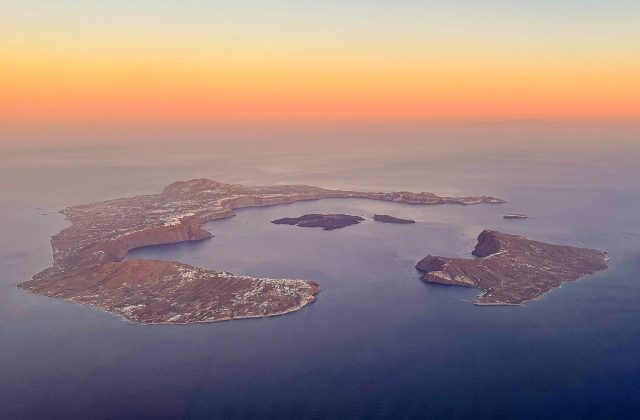
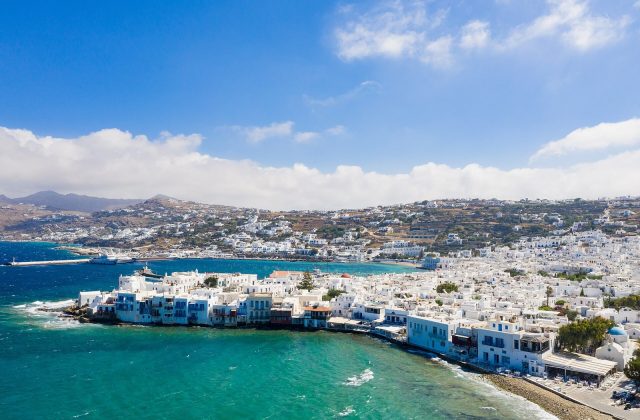
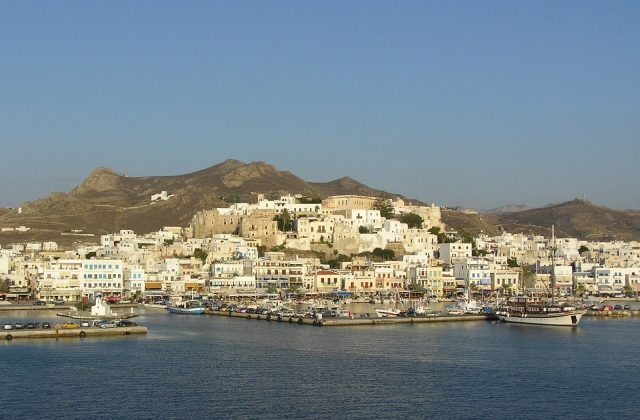
Santorini: arrive or leave by air, about 45 minutes from Athens, and book summer fast boats a few weeks ahead. Mykonos: take the fast boat from Rafina, about two and a half hours, and book July and August crossings and rooms months ahead. Naxos: the most reliable hub, with sailings at least daily even in winter; buy onward fast boats a few days ahead in summer.
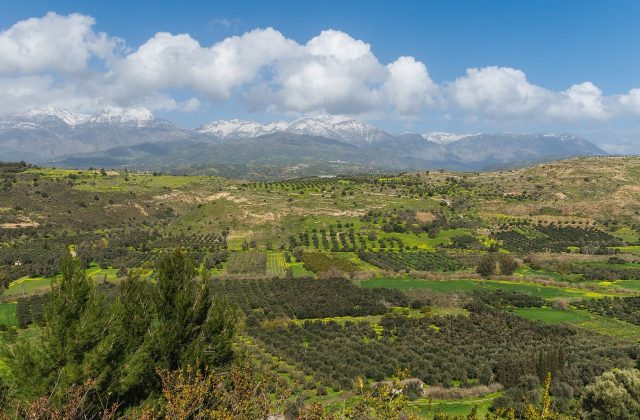
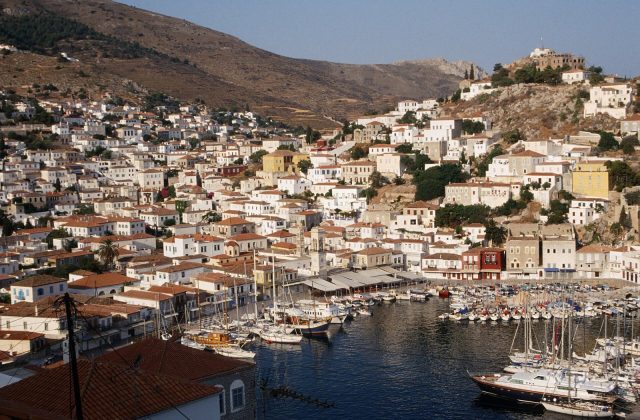
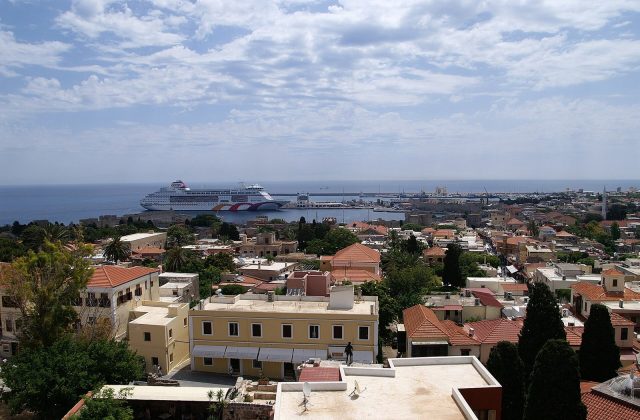
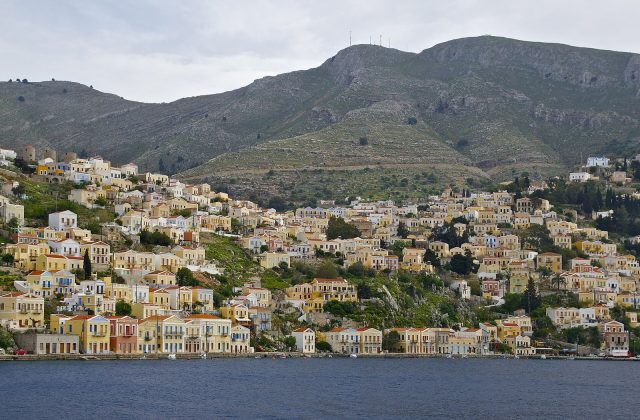
Crete: take the overnight ferry from Piraeus with a cabin, or the summer fast boat from Santorini to Heraklion. Hydra: hydrofoils from Piraeus in about one and a half to two hours, booked weeks ahead for summer weekends. Rhodes: fly in, then take the catamaran to Symi, about 50 minutes, bought a day or two ahead.